
Dengue test kits approved without validation, raising risk of misdiagnosis and death

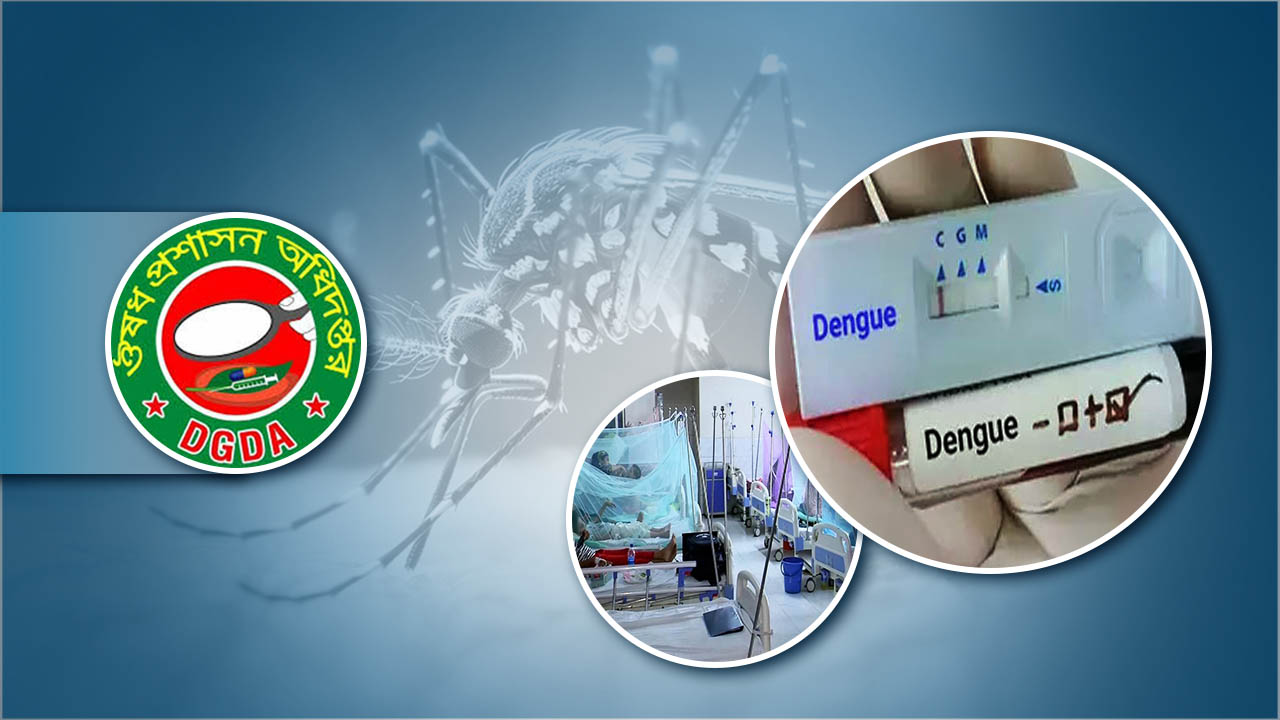
Hospitals across Bangladesh use diagnostic kits to detect dengue infection. However, the Directorate General of Drug Administration (DGDA) has reportedly been approving these kits without properly verifying their effectiveness. As a result, inaccurate test results are becoming more common. Patients infected with dengue may be falsely identified as healthy, preventing them from receiving timely treatment and increasing the risk of death.
According to the Directorate General of Health Services (DGHS), nearly 2,700 people have died from dengue in Bangladesh over the past three years, while more than 500,000 patients have been hospitalized. Experts believe the actual number of infections may be at least five times higher and are urging the government to take immediate action to prevent a larger public health crisis.
Different Sources of Dengue Kits
The dengue diagnostic kits used in government hospitals are not all procured through the same process. Some are assembled locally using imported raw materials, while others are received as foreign donations.
The quality of locally manufactured kits is relatively clear, but the situation is very different for imported kits, which are actually the most widely used. There is no reliable data on the accuracy or performance of these imported kits. Under existing regulations, the DGDA is responsible for evaluating their quality before granting approval. However, the agency has been unable to provide such information.
Investigations have found that between 10 and 12 types of dengue diagnostic kits are used in Bangladesh. These are manufactured by companies in Bangladesh, South Korea, India, and China.
The most expensive kits are produced by South Korea’s SB Bioscience and are reportedly more sensitive than others. However, most kits used in the country are made in India and China and imported by companies such as Carnival Care and Hospitech Essential.
According to DGHS sources, Chinese and Indian kits are the most widely used in both public and private healthcare facilities.
Although imported raw materials may carry World Health Organization (WHO) approval, the quality and performance of the finished kits are not independently verified. Officials from the DGHS’s Communicable Disease Control (CDC) unit warn that this creates a significant risk of inaccurate test results. Despite these concerns, the kits have been used for years.
Approval Without Proper Verification
The DGDA is responsible for assessing the quality of diagnostic kits. Officials from the agency acknowledge that while they inspect production processes, the government has no data on the actual performance, sensitivity, or error rates of imported kits.
One DGDA official stated, “Although the raw materials may have WHO approval, the sensitivity and effectiveness of the finished kits have never been evaluated. Even the rate of false results has not been examined. Under normal circumstances, these kits should not receive approval. Some approvals are obtained by influencing officials.”
One company that imports raw materials and assembles dengue kits locally is OMC Healthcare. When asked about the quality of its products, DGDA Director Dr. Md. Akhtar Hossain said:
“We summoned OMC’s owner. They verbally informed us that effectiveness testing had been conducted at icddr,b. The approval file certainly exists, but we are unable to locate it at the moment.”
Rising Number of False Results
One of Dhaka’s busiest dengue testing centers is Shaheed Suhrawardy Medical College Hospital, where approximately 300 dengue tests (NS1, IgG, and IgM) are performed daily.
Demand increases significantly during peak dengue season, and the hospital requires nearly 100,000 kits annually. These are obtained through the government’s Institute of Epidemiology, Disease Control and Research (IEDCR) or purchased using hospital funds.
Dr. Shamim Ara Keya, Assistant Professor of Pathology at the hospital, told Asia Post, “Most of the kits we use are manufactured in India. A kit with only two months of shelf life does not perform the same as one with ten months remaining. As a result, false positive and false negative reports sometimes occur.”
She added, “Private hospitals place maximum importance on kit quality, but government hospitals face limitations. Procurement depends on price, tender procedures, and other factors. Therefore, there are clear differences in the quality of dengue diagnostic kits being used.”
Kits Purchased at Double the Market Price
CDC sources estimate that Bangladesh requires at least one million dengue diagnostic kits each year. About half are supplied through donations from WHO and China. In 2024, China donated one million kits to Bangladesh, which expired in June of that year.
The government has not purchased new kits since 2023, when 55,000 kits were procured at a cost of BDT 50 million. Each kit cost between BDT 160 and 200.
This year, the DGHS requested four million additional kits through the Central Medical Stores Depot (CMSD), although officials say delivery may take another month.
Investigations at private hospitals indicate that imported kits from India, China, and South Korea cost between BDT 110 and 120 each. Despite this, the government reportedly purchases locally assembled kits at nearly twice that price.
Labaid Hospital, for example, requires around 2,000 kits per month. Although it initially used kits from OMC and other local suppliers, it now relies on South Korea’s SB Bioscience kits.
A hospital administrator, speaking anonymously, said, “Because of concerns about the performance of locally manufactured kits, we import directly from abroad. While Chinese and Indian kits are more common in government hospitals, South Korean kits are considered the most reliable. Their prices are also similar—around BDT 110–120. So paying BDT 200 per kit in government procurement seems excessive.”
A former senior DGHS official alleged that a supplier claimed to use premium raw materials imported from the United States, but actually sourced them from China, reducing production costs while charging the government significantly higher prices.
Allegations of Corruption
Health Directorate officials allege that the procurement of lower-quality kits at inflated prices involved collusion by two former CDC officials: former Line Director Professor Dr. Md. Nazmul Islam and former Deputy Director Dr. Md. Shafiqul Islam.
A former CDC official, speaking anonymously, claimed, “The line director and deputy director accepted BDT 5 million from suppliers in exchange for approving these kits. Since they were leaders of the pro-Awami League doctors’ association SWACHIP, employees feared losing their jobs if they spoke out. Those who protested were transferred.”
The official further alleged, “Because of the use of poor-quality kits, many dengue patients received negative test results despite being infected. As a result, they did not seek treatment. By the time their condition worsened, it was too late. Many patients died. Health Directorate officials cannot escape responsibility for these deaths.”
Repeated attempts to contact Professor Nazmul Islam for comment were unsuccessful. Phone calls went unanswered, and WhatsApp messages received no response.
Former CDC Deputy Director Dr. Shafiqul Islam denied the allegations, saying, “The kits were purchased according to specific criteria. There was an evaluation committee, and procurement followed its recommendations. No financial transactions took place.”
When asked about the committee’s composition and the basis for selecting the kits, he said he could not recall the details.
Which Experts Say
Professor Dr. Be-Nazir Ahmed, former Director of Disease Control at the DGHS and a public health expert, emphasized the dangers of inaccurate diagnostic testing.
He told Asia Post, “If diagnostic tests are not highly accurate, they can increase the risk of death. Patients who receive false results will not enter the healthcare system, and physicians cannot provide appropriate treatment guidance. Complications will develop, and many patients will only seek care when their condition has become critical. We have observed that most severe dengue cases and deaths involved patients who arrived at hospitals too late.”
He added, “The health sector must ensure that all diagnostic kits used for potentially fatal diseases undergo strict quality verification before approval. Authorities should continuously monitor whether these kits provide accurate results. Both public and private sector kits should be tested in certified laboratories to determine their error rates.”
Dr. Ahmed also recommended removing substandard kits from the market and taking legal action against importers and suppliers if their products fail to meet required standards.