
.png)

Malaysian farmers now grow more nutritious food
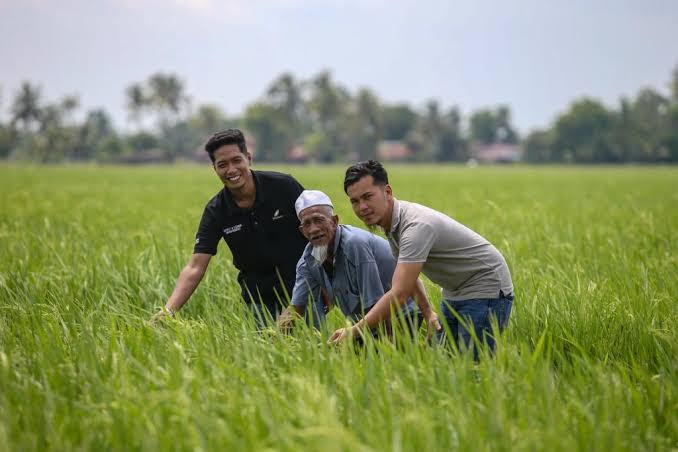
The food world is at a tipping point. As climate change continues to rear its ugly head, farming is becoming increasingly challenging and difficult. Intensive commercial farming, a reliance on monocrops, deforestation and rapid development have increasingly degraded soil quality 100 times faster than natural processes can replenish it in many parts of the world, which typically means lower yields and less nutritious food.

This also begs the question: how do we continue to feed a burgeoning population with existing resources?
According to data consultancy firm Synthesis’ report Menu 2034 – The Future of Food, which forecasts how human diets will alter in a 10-year timeline, there are two likely probabilities: radical transformation – which looks at old-world practices like regenerative farming – and resilient adaptation, which examines the intersection of science and technology in developing future foods.
Of these two probabilities, the likelihood of radical transformation is predicted to be 37.4% only, which is unsurprising given the world we currently inhabit.
Luckily, there are some organisations that are dedicated to turning back the clock and encouraging a return to practices like regenerative farming.
One of them is Zero Foodprint Asia – a hospitality-led NGO that recently set up roots in Malaysia, initiating pilot regenerative farming projects in partnership with restaurants and local farmers looking to create better, healthier produce.
A circular economy
Zero Foodprint Asia is the Asian branch of Zero Foodprint, which was initiated in 2015 by chef Anthony Myint in California in the United States.
In Asia, Zero Foodprint is led by Hong Kong chef and consultant Peggy Chan. Chan’s foray into sustainability and advocacy work began with the launch of her plant-based restaurant Grassroots Pantry in Hong Kong in 2012. Although Chan’s work at the restaurant was meant to build awareness about produce and provenance, she realised she could only do so much as a single entity.
“After two decades of being in the industry and running restaurants, I understood that our power is actually limited to really just a plate level. It’s still very difficult to change the way that things are being done. And so that’s how I shifted during the Covid-19 pandemic into focusing more on collective action as an industry rather than personal pursuit,” says Chan.
Chan had met the founders of Zero Foodprint at a panel in Melbourne and her restaurant was also one of the first in Asia to be involved in the project. During the Covid-19 pandemic, she took on the Asia license and began the project in Hong Kong. This year, Chan won the inaugural Champions of Change award, which was given to her at the Asia’s 50 Best Restaurants 2026 awards.
How does Zero Foodprint Asia work? The organisation’s novel idea is to get restaurants to pledge 1% of their proceeds to funding regenerative farming projects throughout Asia. This funding is disbursed through grants, which farmers need to apply for, with up to US$25,000 (RM102,000) awarded for individual projects. Once selected, the farmers are assigned experts in the region who provide consultancy services to help them fully convert their farms to regenerative farming models.
In Hong Kong, the project started with seven pilot restaurants and seven pilot farms. Today – according to Chan – there have been over 130 participating restaurants and 36 farming projects that were or are currently being funded across the region, with RM5 million in grants awarded.
What is regenerative farming?
Regenerative farming focuses on soil health, encouraging multi-crops as opposed to monocultures and pulling carbon in the atmosphere back into the earth.
This process helps reverse some of the effects of climate change by improving soil health and fertility and helping to store harmful carbon dioxide in the soil. Incidentally, soil is actually one of the planet’s five “natural sinks” that store carbon.
“So when you think of farming, it sounds beautiful and it looks beautiful, but every time we are tilling the land, we are removing carbon from the ground. Carbon sounds like a bad thing because everyone talks about carbon in the atmosphere, but the carbon underground is where it needs to be.
“Because of industrial farming and the way that we till the land, grow monocultures and spray tonnes of chemicals, the land is becoming more and more depleted. And also because of the way that our agricultural systems bind farmers to depend on a lot of these chemicals, a lot of smallholder farmers can’t actually grow food in more organic ways because it becomes more expensive.
“So what we’re basically reintroducing is knowledge that their ancestors would have already had in their country-specific context,” explains Chan.
Most Malaysians would be more familiar with organic farming and by osmosis, organic produce. The difference between regenerative farming and organic farming is that the former looks to replenish soil health and biodiversity using methods like cover cropping (planting vegetation not for harvest but to protect the soil), reduced tillage, and animals fertilising the ground to create well-nourished soil that then lends itself to more nutritious produce.
Organic farming, on the other hand, refrains from using any form of chemicals or man-made fertilisers, which are replaced with natural fertilisers instead.
“What organic certification doesn’t do is it doesn’t actually support farmers in building soil health and actually help replenish and restore soil health.
“You’d be surprised that a lot of organic farms don’t use compost. They use a lot of organic fertilisers. So for example, in Hong Kong, we have certified organic fertilisers that are brought in from the Netherlands. So just think of how absurd that is because you’re trying to do good by not using chemicals, but in the meantime, you’re flying in all of these fertilisers from one single source just because of the certification, right?
“So there are a lot of boundaries and brackets to organic that don’t allow organic farmers to really become intuitive with their knowledge and their wisdom and their connection with the land, which is what’s really, really missing and that regenerative farming is proposing,” says Chan.
The Malaysia project
Zero Foodprint Asia’s maiden foray into Malaysia began this year with seven pilot farms awarded grants and five restaurants participating in the project so far.
One of the first people to sign the 1% pledge was Johnson Wong of acclaimed Penang restaurants Gen (a Michelin Selected restaurant), Communal Table by Gen, Wine Not and Root House by Gen. Wong is so committed to the endeavour that he signed every single one of his restaurants onboard for the project.
“For me, we want to do what we can instead of just a brand association kind of thing, so we chose to participate with all our outlets.
“I think it’s very important to know where our sources are coming from. The idea is to cut down the middlemen and deal directly with sources and to know their intentions and their struggles. If you want to improve anything, you have to know where the problems are,” says Wong.
At his restaurants, Wong implements an optional 1% tack-on charge that guests can choose to pay in order to donate to the regenerative farming projects around Asia. So far, he says the take-up has been highest at his fine-dining restaurant Gen, where people are more open to supporting a project like this.
In terms of how farmers are chosen for the grants, Chan says they look for those who demonstrate a willingness to implement change.
“After all these years, we understand that we can’t really convince farmers to transition. If they don’t have the intent to, it would just be a waste of time for both sides.
“They would have to demonstrate their intent to move away from conventional practices into something that might be a bit risky at the beginning. And that’s where we’re coming in with the grant – that we are risk-sharing with them for that first year or two of the transition,” says Chan.
With regenerative farming, there is typically a turn-around period, which means farmers will have to wait for the soil to replenish and heal before the venture can see any gains. Often this takes years (anywhere from two to five years, depending on how degraded the soil is), which is why Zero Foodprint Asia’s funding is important for those who have little means to take this step themselves.
Once soil has been replenished, the harvest is healthier and more nutritious and often surpasses production in conventional farming, with studies showing up to a 200% yield increase.
In all the countries that they operate in, Zero Foodprint Asia typically identifies scientists, researchers and technical specialists who monitor each project. In Malaysia, there are two cluster hubs – one in West Malaysia and one in East Malaysia.
Each hub has an assigned expert – in West Malaysia, farmers in Pahang, Perak, Selangor and Penang are working with renowned Malaysian agronomist Dr Suzie Haryanti Husain, who founded SHE (Soil Health Expert) Intelligence.
In East Malaysia, the farmers get to work with soil scientist Professor Dr Patricia King of Universiti Putra Malaysia Sarawak.
Farming in new ways
Eric Chong is a farmer who is one of the grantees of Zero Foodprint Asia’s regenerative farming fund. Chong is a former corporate slave who gave up the rat race to run a farm. He has been running Green Acres Farm in Balik Pulau, Penang, for 18 years now.
At his farm, Chong grows bananas, papayas, durian, cempedak, lemongrass and pineapples, to name a few. He has always believed in regenerative farming or in his words, “the way my grandmother used to farm without chemicals” and has applied these principles to Green Acres, which hosts an incredible range of birds, insects and other wildlife.
He allows his fruits to grow as they should and is uninterested in aesthetics. “We don’t look for 100%, we don’t look for perfection, we look for quality and things that are very nutritious,” he says.
Chong says he was interested in participating in the project because he wanted to understand the science behind it and see what was missing in his soil.
“They (the experts) did say that our soil is acidic. It’s still within the good range, but it’s borderline, so what they have done is advise us to use compost which is high in alkalinity, which will neutralise the acidity so plants can absorb more nutrients.
“So these are the things that made me want to participate because it costs a lot of money to get your soil tested scientifically. So they are offering to do it and also to advise us, so that’s why I’m very grateful,” says Chong.
Another grantee is Dr Tharun K. Pillai, a medical doctor who started a farm in Nibong Tebal in Penang after becoming frustrated when he saw patients coming in with comorbidities like diabetes and hypertension.
Tharun’s farm is now five years old and initially he started out doing conventional farming as he wanted to truly understand what conventional farmers were up against and also because it was practical.
“If you’re going to have a change in a system, you must understand farmers first. You can’t lecture people if you don’t know what they’re talking about.
“So I did conventional farming first for this reason and also because the soil at the farm was completely degraded and I needed income generation. So while I was doing conventional farming, I got the idea of doing regenerative farming,” says Tharun.
Tharun currently grows brinjal, chillies, cucumbers, papayas, limes and galangal and has now converted 1.5 acres of his five-acre farm for the regenerative farming project.
“I had to think quite a bit before making this decision to ensure the economics were not affected, so it was basically about ensuring that the rest of the farm was highly productive so I could get a reasonable market value for the produce while doing regenerative farming.
“But one of the things I have learnt since embarking on this is to focus more on the soil rather than the plant. Before this, I was focused on the growth of the plant, not the soil. But now I realise that when you have a thriving soil system, that leads to healthier plants,” explains Tharun.
Moving forward, Chan says she hopes to rope in more participating restaurants to fund the regenerative farming projects in Malaysia and widen the number of participating farms. At the moment, Hong Kong restaurants are largely funding the Malaysian farm projects.
“What we naturally want to see is that by this time next year, we would have enough raised in Malaysia from Malaysian restaurants such that it can feed into the next cycle of grants for farmers. And that’s how it grows,” says Chan.
Source: The Star