
Illegal fishing nets threaten native fish, biodiversity in Haor
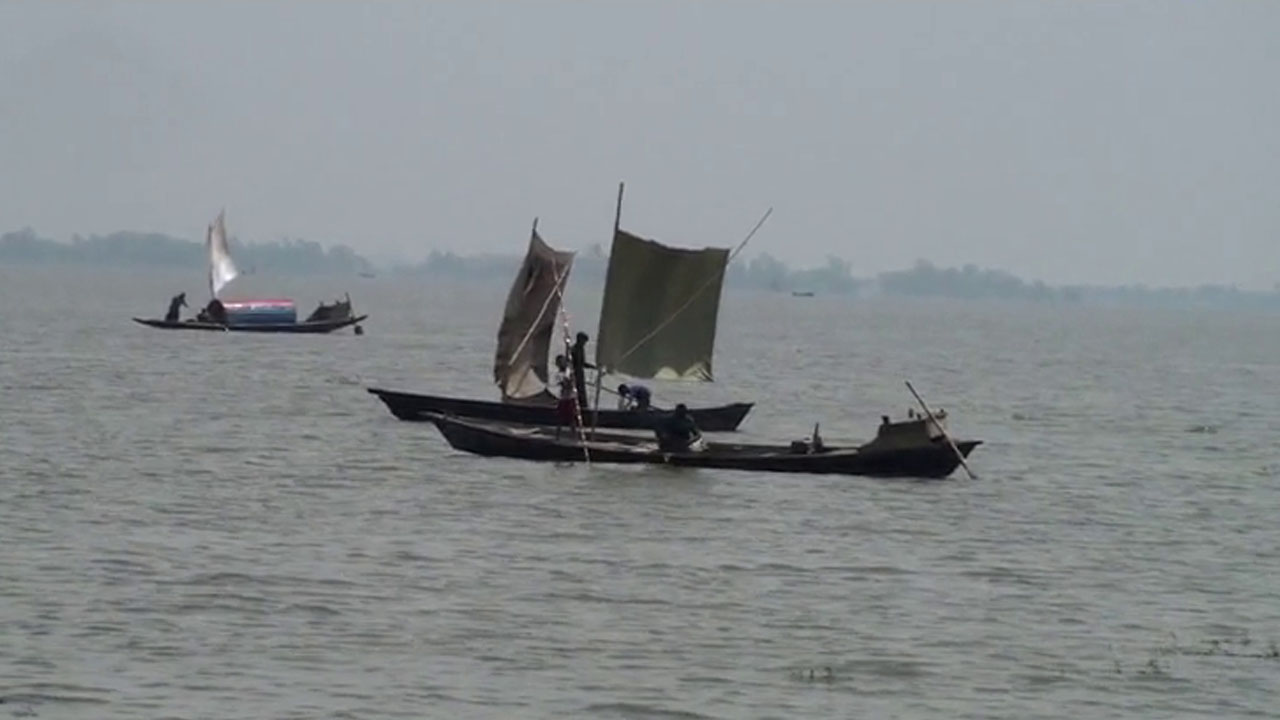
The vast haor wetlands, rivers, and canals of Habiganj, once renowned as rich habitats for indigenous fish species, are now under severe threat from the widespread use of illegal fishing nets.
The indiscriminate use of current nets (monofilament gill nets), ring nets, and Chinese duari traps is not only driving the decline of popular native fish such as snakehead (Shol), giant snakehead (Gojar), pabda, boal, and air, but is also posing a serious risk to the region's aquatic biodiversity.
Local residents allege that organized groups are using banned fishing gear under the cover of darkness in water bodies across the upazilas of Baniachang, Ajmiriganj, Lakhai, Nabiganj, Chunarughat, and Madhabpur. As a result, not only mature fish but also fry, egg-bearing brood fish, and fish eggs are being destroyed, severely disrupting the natural breeding cycle.
Arab Ali, a fisherman from Baniachang Upazila, said, "During the monsoon, a single cast of the net used to catch a variety of fish, including shol, gojar, pabda, and climbing perch (koi). Now, because of illegal current nets, even fish fry cannot survive. Fish stocks have declined so much that our livelihoods are at risk."
Another fisherman, Abdul Karim, said, "Unscrupulous individuals freely use current nets and ring nets at night. Due to the lack of regular enforcement, they have become even more reckless. Fishing used to provide enough income to support our families, but now many fishermen are being forced to seek other occupations."
Environmentalists and fisheries experts warn that the use of prohibited fishing nets is reducing fish production while also causing severe damage to the entire aquatic ecosystem. The natural life cycles of various aquatic animals and plants are being disrupted, posing long-term threats to the local environment, food security, and economy.
Despite the prolonged use of illegal fishing gear, effective monitoring and regular enforcement remain inadequate, allowing offenders to continue their activities with little interference.
Baniachang Upazila Fisheries Officer Borhan Uddin said that regular drives are being conducted against the use of banned nets. He noted that recent operations in the Pratappur and Bhabanipur haors resulted in the seizure of illegal nets and legal action against those responsible. Public awareness campaigns aimed at protecting fish breeding and aquatic biodiversity are also continuing.
Habiganj District Fisheries Officer Shariful Alam stated that the use of illegal fishing nets has become a major problem across nearly all upazilas in the district. Although shortages of manpower and logistical resources have made it difficult to achieve full enforcement, efforts are underway to strengthen monitoring and enforcement activities.
He added that the government has officially designated Habiganj, along with six other districts, as haor districts. To protect fish breeding, fishing has been prohibited from May 30 to June 28. However, no financial incentives or compensation have been provided to fishermen during the ban. The government is considering introducing such support in the future.
He further said that although a large number of fish fry have been produced in the haor wetlands this year, overall fish production may decline due to insufficient water levels.