


‘Cockroaches’ Reached Parliament: A new challenge for Modi government
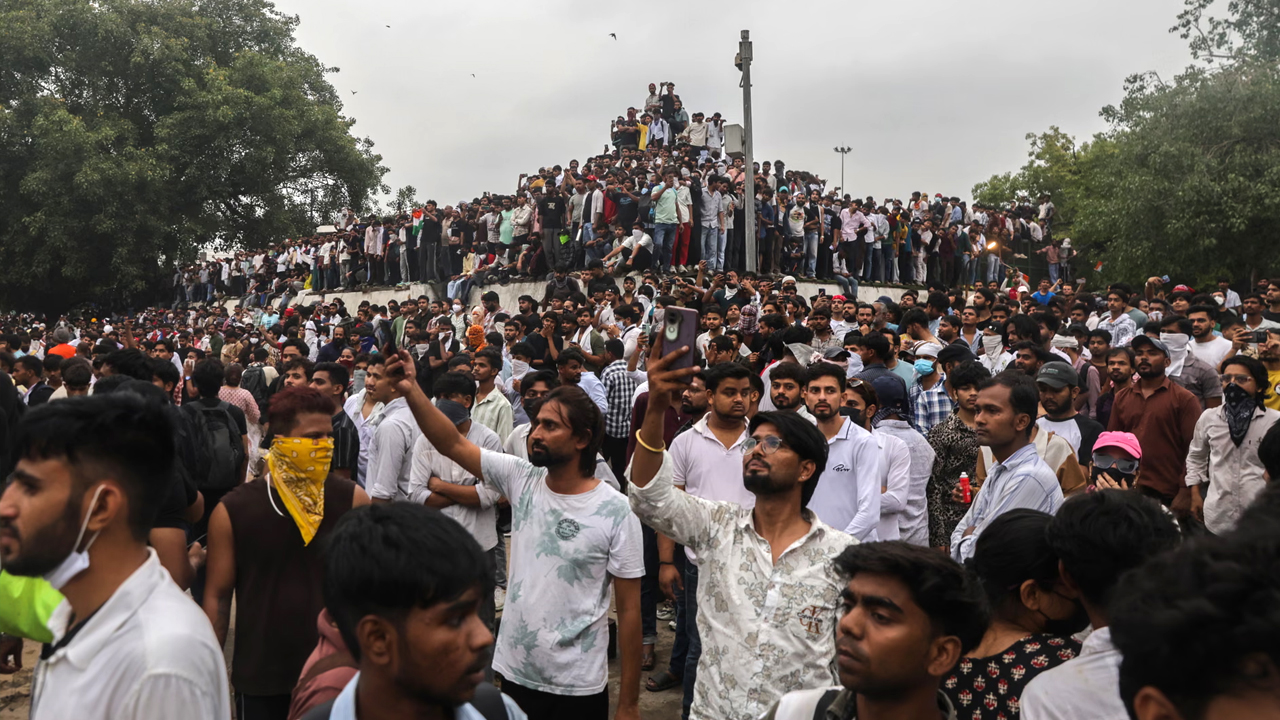
What began as a joke has transformed into a powerful movement. The Cockroach Janata Party (CJP), launched in jest, has emerged as one of the most unexpected challenges facing Indian Prime Minister Narendra Modi’s powerful right-wing government, fueled by millions of disillusioned young people.

The party was founded in May by 30-year-old Abhijit Dipke, an Indian who had just graduated from a university in the United States. The idea came after India's Chief Justice, during a court hearing, compared unemployed young people to "parasites" and "cockroaches." Outraged by the remark, Dipke posted a sarcastic question on social media: "What if all the cockroaches came together?"
The response was overwhelming. He soon created a website and social media accounts for the satirical Cockroach Janata Party, primarily to mock Modi’s ruling Bharatiya Janata Party (BJP). He published a manifesto sharply criticizing the government. The party adopted the slogan: "The political party for those the system forgot to count."
Within just two weeks, the CJP amassed more than 22 million Instagram followers, surpassing the BJP’s online following. The Modi government, widely criticized for its intolerance of dissent, reportedly attempted to have the party’s social media accounts blocked on national security grounds but failed.
What Are the CJP’s Demands?
As the CJP gained momentum, Dipke focused on one of the most pressing issues confronting millions of Indian students: repeated leaks of medical entrance examination papers.
Authorities have repeatedly been accused of selling exam papers to the highest bidder. Competition is fierce, with more than 2 million candidates vying for only about 130,000 medical seats through the highly competitive National Eligibility-cum-Entrance Test (NEET).
Families often spend their life savings—or fall into heavy debt—to pay for expensive coaching. India now spends more on private tutoring than the government's higher education budget.
The recurring paper leaks have forced millions of students to retake exams. In recent years, dozens of students have reportedly died by suicide amid the immense pressure. The problem extends beyond NEET, with several other competitive examinations also affected by paper leaks.
Critics accuse the Modi government of avoiding accountability for the examination scandals. The CJP began mobilizing supporters to demand government accountability and the resignation of Education Minister Dharmendra Pradhan.
For many members of India's Generation Z and Millennial population, the CJP has become a voice against a failing education system and what they describe as systematic exclusion from employment opportunities. A recent study found that nearly 40% of Indian graduates under the age of 25 are unemployed.
Caption: CJP supporters climb police barricades during a march toward Parliament. Photo: Collected
When Did the CJP First Take to the Streets?
The CJP held its first street protest in early June, demanding the resignation of Education Minister Dharmendra Pradhan. Returning from the United States, Dipke personally led the demonstrations, which began in New Delhi before spreading nationwide.
Later that month, the party organized a second major protest in Delhi, declaring that demonstrations would continue until the education minister stepped down.
Among those joining the protest was Sonam Wangchuk, the renowned engineer and education rights activist from Ladakh. Wangchuk had been arrested under India's anti-terror law the previous year over his activism.
Expressing solidarity with students, Wangchuk announced an indefinite hunger strike inspired by Mahatma Gandhi's principles of nonviolent protest, pledging not to eat until the minister resigned.
The protests and Wangchuk's fast continued into July. Several senior opposition leaders visited the demonstrators, but the Modi government refused to engage in talks with either the CJP or Wangchuk. Instead, Education Minister Dharmendra Pradhan dismissed them as the "B-team of terrorists."
How Did Sonam Wangchuk Build Support?
After more than two weeks without food, Wangchuk's health began deteriorating, increasing pressure on the government.
On the 18th day of his fast, a Delhi court ordered that his health be monitored daily.
Early on Sunday (July 19), the 20th day of the hunger strike, Delhi Police forcibly removed Wangchuk and admitted him to a government hospital. The move triggered widespread outrage across the country.
Police said they acted to protect his health, but Wangchuk's wife condemned the incident as an "illegal detention."
From his hospital bed, Wangchuk called on CJP supporters to march toward Parliament on Monday (July 20), renewing demands for the education minister's resignation.
Caption: CJP supporters clash with police during the protest. Photo: Collected
How Large Was Monday's Protest?
Monday's demonstration became one of the largest anti-government protests India has witnessed in recent years.
Thousands of protesters gathered in central Delhi from early morning, joining hundreds who had camped overnight.
Most participants were students and young people, although large numbers of parents of students affected by paper leaks also joined.
Delhi Police denied permission for a march toward Parliament, setting up barricades across the city and shutting down internet services. Protesters were confined to a designated protest site about a mile from Parliament.
Despite the restrictions, crowds continued to pour in, with more than 20,000 people gathered before noon.
When protesters attempted to march toward Parliament, police responded with baton charges and tear gas. CJP leaders and opposition politicians strongly condemned the police action.
Both protesters and police officers were injured in the clashes. Dipke described the police response as "extremely brutal."
What Happens Next?
After weeks of dismissing the movement, the Modi government finally offered talks on Monday morning.
During a brief 10-minute meeting, CJP representatives presented three key demands. According to the party's spokesperson, the government "has not made any commitments so far."
Education Minister Dharmendra Pradhan has not publicly commented on the protests.
Late Monday night, police attempted to clear the protest camp in Delhi. However, Dipke insisted that demonstrators would not leave until the education minister resigned.
In a post on X, the party declared: "This peaceful protest is not ending!"
Author: Hannah Ellis-Petersen, Delhi Correspondent, The Guardian.