
Cockroach Democracy: Unarmed but dangerous

Can all the people be fooled all the time? Can a country of 1.5 billion people be dragged around like a corpse forever? It never can. The "cockroaches" have now taken to the streets. After many years, I once again feel proud to think of myself as an Indian.
Just when people were losing all hope, they arrived—a fresh wave of young cockroaches, swept in like the monsoon rains. They were born from the unholy union of a judge and a farce.
We all know this story. Even so, it deserves to be told once more for the sake of history.
India's Chief Justice Surya Kant made an arrogant and deeply insulting remark, mocking a group of unemployed young Indians by calling them "cockroaches." In response, Abhijit Dipke, an Indian student living in Boston, posted a message on Instagram asking: "What if all the cockroaches came together?"
Within moments, millions responded to his call. Thus was born the Cockroach Janata Party (CJP). Dipke quickly emerged as the movement's principal organizer. Its first demand was the resignation of Education Minister Dharmendra Pradhan, who they accused of presiding over a corrupt and decaying ministry.
During his tenure, one government recruitment examination after another has been tainted by question paper leaks. According to opposition parties, around 152 examination papers have been leaked since 2014.
These repeated leaks have devastated the lives of millions of young people. They spent years preparing for these examinations through relentless hard work. Many parents sold their land or homes to pay for their children's education and examination fees. It amounts to a new form of legalized extortion. Following the recent leak of the NEET examination paper, 12 students reportedly took their own lives after suffering severe emotional distress.
As public anger spread across the internet like a tsunami, Dipke returned from Boston on June 6. From the airport, he went directly to Jantar Mantar, Delhi's iconic protest site. There he was joined by Sonam Wangchuk, the well-known social activist and education reformer from Ladakh, who announced an indefinite hunger strike.
Six members of the All India Students' Association (AISA), the student wing of the Communist Party of India (Liberation), also joined the protest. They were Neha Bora, Manish Kumar, Amin Amitosh, Danish Ali, Hrishikesh and Dipak. They began their own hunger strike on a nearby stage.
Demonstrations soon spread to other cities across India. As the health of the hunger strikers deteriorated, the young "cockroaches," who had first mobilized online, began gathering in person at Jantar Mantar.
The Cockroach Janata Party announced that on July 20, the opening day of Parliament's monsoon session, it would march toward the Parliament building. Two days before the planned march, police forcibly removed Sonam Wangchuk from the protest site.
He was initially held in a government hospital and later transferred to a private hospital after persistent demands from his wife. He continued his hunger strike there. On the morning of July 20, the day of the march, the AISA students ended their fast.
Thousands upon thousands of young protesters poured into the capital. They arrived by train, bus, plane and metro, with their numbers growing by the hour. Before the first rays of the sun pierced Delhi's monsoon sky, hundreds of thousands of young people had already assembled at Jantar Mantar. By sunrise, one thing had become unmistakably clear: the generation that had watched its future being stolen before its eyes had finally stepped onto the streets. They had come to reclaim the rights their forebears had surrendered.
They were determined to recover their civic rights and their dignity. The courage, decency and wit of these young protesters dissolved our familiar fears and paralysis like camphor in the wind. By the end of the day, it was evident that the movement had grown far beyond the demands first raised by its leaders. Education Minister Dharmendra Pradhan was no longer the central issue.
The struggle had expanded into something much larger. The decay that had spread throughout India's education system—from top to bottom—had become impossible to ignore, its stench resembling that of a rotting corpse. Even children as young as seven or eight who joined the demonstrations made that painfully clear.
A few days before the march, the government quietly appointed a new police chief. Rumors circulated about sweeping plans being devised by the powerful Union Home Minister. Yet on July 20, the police and the Home Ministry failed completely to contain the human tide. They had profoundly underestimated the depth of the movement. The government tried everything—it shut down bus services, blocked roads and closed metro stations. None of it worked.
Authorities also attempted to shut down the internet. But these young people, who live and organize in the digital world, could not be silenced. They flooded social media with one satirical meme and video after another, provoking both laughter and tears. Even in a city as unsafe as Delhi, many young women protesters said they felt secure within the crowds, although some also accused police officers of inappropriate touching.
We saw Muslims, Hindus, Christians, Sikhs, Buddhists, and people from every community standing together. Facing the police, they protected and supported one another. They did not deliver grand speeches. Instead, through their actions, they showed us what the India of our dreams could look like.
To contain the situation, the police welded shut their yellow metal barricades. They brought in trucks loaded with stones and some vehicles that had already been damaged. The intention was to create the impression that the protesters had turned violent and that the police were merely acting in self-defense.
They also deployed plainclothes thugs armed with batons.
As they prepared for a violent crackdown, members of the Rapid Action Force (RAF) removed the name tags from their uniforms. Pro-government media outlets stood ready to spread false reports. Some even began broadcasting stories about incidents that had not yet occurred. India’s media, it seems, is often more concerned with the future than with the present.
But none of these tactics worked. The police and the RAF launched a brutal baton charge. Children suffered head injuries, and many people had their arms and legs broken. Tear gas was also fired. Even then, the young marchers refused to stop. They continued advancing toward Parliament. As they approached the Parliament complex, security personnel took positions, pointing AK-47 rifles at the unarmed students.
Even so, the march did not stop. The farther the young protesters advanced, the more the government's mask fell away. Its true fascist character became increasingly visible. This monstrous regime appears utterly incapable of understanding the country's diversity and history. It knows only how to hate; it neither knows how to love nor how to think.
As the protesters drew closer, our brave, chest-thumping Prime Minister was hurriedly evacuated to a secure location. Lawmakers were not allowed to leave the gleaming new Constitution Parliament building. It almost seems as though the building's primary purpose is to witness the Constitution being violated every single day.
By evening, the police had demolished the protest site's main stage. But by nightfall, ordinary people had rebuilt it. Later that night, as the police were leaving, the protesters stood and applauded them—applauding them for beating children with batons. Bravo, Modiji! Bravo!
It would be foolish to expect this movement to bring about dramatic change overnight. But it would be equally mistaken to dismiss it. It goes without saying that India's media will now spread rumors about foreign funding or conspiracies involving the CIA. As a proud andolanjeevi—the mocking label Modiji uses for people like us—I admit that I, too, was initially skeptical.
I feared that we might be witnessing another version of the 2011 anti-corruption movement led by Anna Hazare. Though it began with noble intentions, that movement ultimately gave us an authoritarian political force that has dismantled India's state institutions. It no longer distinguishes between the ruling party and the government. It respects neither the nation nor its citizens. It has brought international embarrassment upon India and reduced the country to a state of humiliation.
But all my doubts disappeared when I saw the hostility of India's mainstream media toward the Cockroach Janata Party. That, to me, was the most reassuring sign. I was delighted to learn that the movement's leading face, Abhijit Deep, came from a Dalit family. Even more encouraging was the fact that no one made an issue of his caste identity.
The greatest change, however, occurred within me when I heard him say something remarkable. He said, "If my name had been Khalid, or if I had been a Muslim, I would have been in prison by now." In saying this, he had the courage to expose the painful reality of India's justice system and society. In our country, the law is not equal for everyone. Everything depends on your religion, caste, class, family background, and gender. It was a profoundly insightful observation.
At such a time, he made this statement publicly, when even opposition political leaders avoid using the word "Muslim" and instead speak only of "minorities" for fear of alienating Hindu voters. It was his courage that drew me to Jantar Mantar. I knew that when Deepak used the name "Khalid," he was most likely referring to Umar Khalid, the former student leader from Jawaharlal Nehru University (JNU) in Delhi.
Umar Khalid, Sharjeel Imam, and many others have now spent nearly six years in prison without trial.
What was Umar's crime? In 2020, he called for a peaceful protest against the Citizenship Amendment Act (CAA). At the time, Hindu extremists were carrying out arson attacks, killings, and setting mosques on fire across Delhi. The police stood by as silent spectators to the violence and, in some cases, even participated in it. Yet our judges have repeatedly rejected Umar's bail petitions. They have lost the courage to uphold justice.
As the crowd of protesters continued to grow, I found myself thinking how fortunate it was that most of them were not Muslims, Sikhs, Christians, or Indigenous people. Otherwise, by now they might have been crushed, shot dead, or imprisoned.
How fortunate they were not Kashmiris; otherwise, pellet guns might already have blinded them. How fortunate that most of them were Hindus. That single thought reveals just how tragic India's current situation has become. Yet the situation could change at any moment. Reports suggest that thousands of paramilitary personnel are being flown in from other states. None of us knows what lies ahead.
Where is this situation taking us? During Anna Hazare's anti-corruption movement, major corporate media outlets provided round-the-clock coverage. But the "Cockroach Janata Party" relies solely on the internet. Hazare's movement was eventually taken over by the RSS, and Narendra Modi's BJP reaped the full political benefit. These young protesters, however, have no organized political party behind them.
The spontaneous anger we are witnessing today will eventually fade unless it develops into meaningful political action. Concerned citizens and opposition parties must stop their internal feuds and stand beside these young people. The government knows that the opposition is unlikely to unite, which is why it remains unconcerned. The state can afford to wait, but ordinary people cannot.
At this very moment, several other protests are also unfolding across India. Indigenous communities in Madhya Pradesh are protesting the Ken-Betwa river-linking project. Villagers in Uttarakhand are demonstrating against indiscriminate deforestation. People are raising their voices against the environmental destruction of Great Nicobar Island. Manipur continues to burn. Jobs are disappearing, the prices of essential goods are soaring, and public anger is steadily mounting.
Meanwhile, the BJP-RSS's supposedly "divine" political project has been exposed for what it really is: a deception. The plunder surrounding the Ram Temple in Ayodhya now resembles the plot of a cheap Bollywood film. Fake godmen and corrupt politicians are building luxury hotels, grabbing land, and driving expensive cars. Exploiting the faith of poor people has made them enormously wealthy. The reach of this corruption now extends to the highest levels of the country.
But can the young people's "cockroach power" pull us out of this pit? It will not be easy. A look at the history of India's mass movements offers little reason for optimism. In the 1960s and 1970s, armed uprisings such as the Naxalite movement demanded land redistribution for peasants. They were brutally suppressed. In the 1980s, the Narmada Bachao Andolan, followed by farmers' struggles in Andhra Pradesh, Chhattisgarh, and Jharkhand to protect their land, also met the same fate.
By the early 2000s, poor people had been reduced to relying on the 100-day employment guarantee scheme. It offered just three months of work at minimum wages—barely enough to buy a decent meal at a large city restaurant. The current government has even taken away that limited support. Instead, it throws a small quantity of subsidized rations to the poor in bags bearing Modi's photograph—much like tossing alms to beggars from a stolen vehicle. With the country's economic slowdown deepening, even this minimal ration support is now under threat.
Today, in 2026, we find ourselves fighting to protect our right to vote and our citizenship. The Citizenship Amendment Act (CAA) and the National Register of Citizens (NRC) are the Hindutva version of Nazi Germany's 1935 Nuremberg Laws. At that time, citizenship in Germany depended on proof of ancestry. How many people in India possess such old family documents?
The anti-CAA movement was crushed through killings, arrests, and prolonged imprisonment of protesters. Yet the movement did succeed in slowing the implementation of the law. Now it has returned in a new form under the Special Intensive Revision (SIR) of the electoral rolls. We are now being told that even a passport is no longer considered proof of citizenship.
Millions of people are having their names removed from the voter rolls. Across the country, people are desperately searching for documents to prove their ancestry. We no longer know where we stand. Are we legitimate citizens or illegal ones? Do we have any rights? Who among us will end up in those vast detention camps? The primary weapon of fascism is to spread chaos and confusion among ordinary people.
Our fear and despair may be making us overly hopeful about this youth movement. Many are comparing it to the youth-led uprisings in Bangladesh, Nepal, or Sri Lanka that brought down governments. But India is a much larger country, and such an outcome is far from easy here.
Others compare it to the movement led by Jayaprakash Narayan that contributed to the fall of Indira Gandhi in 1977. But the Cockroach Janata Party is unlike either of those movements. It is an entirely new movement with its own distinct character. It is the struggle of India's powerless youth against a cruel and vindictive government. The authorities are already plotting revenge against the movement's key leaders.
How does a government that is becoming increasingly unpopular remain so confident? Because it knows how to control elections. It has captured every institution of the state. The Election Commission is no longer independent. Electronic voting machines have been manipulated to serve its interests. Genuine voters have been removed from electoral rolls while fake names have been added. Election officials function as obedient servants of the government.
The courts turn a blind eye to electoral fraud. The police have no understanding of neutrality. Much of the media bows to the wishes of those in power. Electoral constituencies are being redrawn to benefit the ruling Bharatiya Janata Party (BJP). Why, then, should the government fear anything? Why should it listen to ordinary people? It is the richest political party in the world, backed by some of the world's wealthiest industrialists. It believes that money can buy everything.
But can this continue forever? Can people be deceived indefinitely? Can a nation of 1.5 billion people be dragged along like a lifeless body forever? Impossible. The cockroaches have now taken to the streets. India's farmers have once again begun marching toward Delhi in protest against the proposed India–U.S. trade agreement.
Through this harmful agreement, the Indian government is preparing to sign away the country's sovereignty. Delhi's borders have been sealed, but that will not stop the farmers. We, too, must learn from the farmers and the young protesters. These young people have given us a new opportunity. It is now up to all of us to make the most of it.
When a prime minister is forced to physically flee from a protest, the time for their political downfall is also drawing near.
Yet the ruling party will not surrender power easily. It will not tolerate such humiliation in the nation's capital. Bloodier days may still lie ahead. The patience of the young protesters is wearing thin. At any moment, someone in the movement may lose control in a moment of anger, giving the police the pretext they need to open fire. They will use every possible form of repression to crush this movement. We must do everything in our power to stop them.
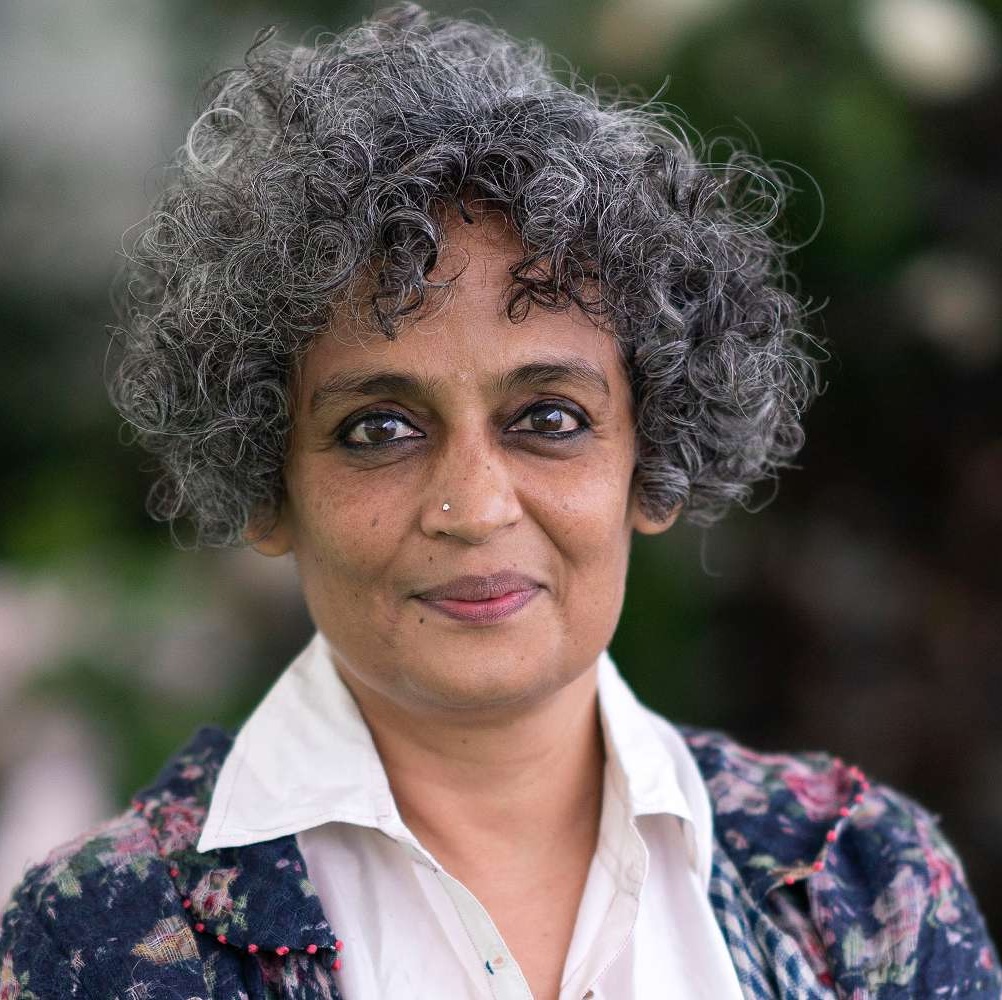
Author : Arundhati Roy, an Indian novelist, essayist, and political activist, she is widely known for her outspoken and critical views on literature, human rights, the environment, global capitalism, Kashmir, and a range of political issues in India.
How fortunate they were not Kashmiris; otherwise, pellet guns might already have blinded them. How fortunate that most of them were Hindus. That single thought reveals just how tragic India's current situation has become. Yet the situation could change at any moment. Reports suggest that thousands of paramilitary personnel are being flown in from other states. None of us knows what lies ahead.
Where is this situation taking us? During Anna Hazare's anti-corruption movement, major corporate media outlets provided round-the-clock coverage. But the "Cockroach Janata Party" relies solely on the internet. Hazare's movement was eventually taken over by the RSS, and Narendra Modi's BJP reaped the full political benefit. These young protesters, however, have no organized political party behind them.
The spontaneous anger we are witnessing today will eventually fade unless it develops into meaningful political action. Concerned citizens and opposition parties must stop their internal feuds and stand beside these young people. The government knows that the opposition is unlikely to unite, which is why it remains unconcerned. The state can afford to wait, but ordinary people cannot.
At this very moment, several other protests are also unfolding across India. Indigenous communities in Madhya Pradesh are protesting the Ken-Betwa river-linking project. Villagers in Uttarakhand are demonstrating against indiscriminate deforestation. People are raising their voices against the environmental destruction of Great Nicobar Island. Manipur continues to burn. Jobs are disappearing, the prices of essential goods are soaring, and public anger is steadily mounting.
Meanwhile, the BJP-RSS's supposedly "divine" political project has been exposed for what it really is: a deception. The plunder surrounding the Ram Temple in Ayodhya now resembles the plot of a cheap Bollywood film. Fake godmen and corrupt politicians are building luxury hotels, grabbing land, and driving expensive cars. Exploiting the faith of poor people has made them enormously wealthy. The reach of this corruption now extends to the highest levels of the country.
But can the young people's "cockroach power" pull us out of this pit? It will not be easy. A look at the history of India's mass movements offers little reason for optimism. In the 1960s and 1970s, armed uprisings such as the Naxalite movement demanded land redistribution for peasants. They were brutally suppressed. In the 1980s, the Narmada Bachao Andolan, followed by farmers' struggles in Andhra Pradesh, Chhattisgarh, and Jharkhand to protect their land, also met the same fate.
By the early 2000s, poor people had been reduced to relying on the 100-day employment guarantee scheme. It offered just three months of work at minimum wages—barely enough to buy a decent meal at a large city restaurant. The current government has even taken away that limited support. Instead, it throws a small quantity of subsidized rations to the poor in bags bearing Modi's photograph—much like tossing alms to beggars from a stolen vehicle. With the country's economic slowdown deepening, even this minimal ration support is now under threat.
Today, in 2026, we find ourselves fighting to protect our right to vote and our citizenship. The Citizenship Amendment Act (CAA) and the National Register of Citizens (NRC) are the Hindutva version of Nazi Germany's 1935 Nuremberg Laws. At that time, citizenship in Germany depended on proof of ancestry. How many people in India possess such old family documents?
The anti-CAA movement was crushed through killings, arrests, and prolonged imprisonment of protesters. Yet the movement did succeed in slowing the implementation of the law. Now it has returned in a new form under the Special Intensive Revision (SIR) of the electoral rolls. We are now being told that even a passport is no longer considered proof of citizenship.
Millions of people are having their names removed from the voter rolls. Across the country, people are desperately searching for documents to prove their ancestry. We no longer know where we stand. Are we legitimate citizens or illegal ones? Do we have any rights? Who among us will end up in those vast detention camps? The primary weapon of fascism is to spread chaos and confusion among ordinary people.
Our fear and despair may be making us overly hopeful about this youth movement. Many are comparing it to the youth-led uprisings in Bangladesh, Nepal, or Sri Lanka that brought down governments. But India is a much larger country, and such an outcome is far from easy here.
Others compare it to the movement led by Jayaprakash Narayan that contributed to the fall of Indira Gandhi in 1977. But the Cockroach Janata Party is unlike either of those movements. It is an entirely new movement with its own distinct character. It is the struggle of India's powerless youth against a cruel and vindictive government. The authorities are already plotting revenge against the movement's key leaders.
How does a government that is becoming increasingly unpopular remain so confident? Because it knows how to control elections. It has captured every institution of the state. The Election Commission is no longer independent. Electronic voting machines have been manipulated to serve its interests. Genuine voters have been removed from electoral rolls while fake names have been added. Election officials function as obedient servants of the government.
The courts turn a blind eye to electoral fraud. The police have no understanding of neutrality. Much of the media bows to the wishes of those in power. Electoral constituencies are being redrawn to benefit the ruling Bharatiya Janata Party (BJP). Why, then, should the government fear anything? Why should it listen to ordinary people? It is the richest political party in the world, backed by some of the world's wealthiest industrialists. It believes that money can buy everything.
But can this continue forever? Can people be deceived indefinitely? Can a nation of 1.5 billion people be dragged along like a lifeless body forever? Impossible. The cockroaches have now taken to the streets. India's farmers have once again begun marching toward Delhi in protest against the proposed India–U.S. trade agreement. Through this harmful agreement, the Indian government is preparing to sign away the country's sovereignty. Delhi's borders have been sealed, but that will not stop the farmers. We, too, must learn from the farmers and the young protesters. These young people have given us a new opportunity. It is now up to all of us to make the most of it.
When a prime minister is forced to physically flee from a protest, the time for their political downfall is also drawing near.
Yet the ruling party will not surrender power easily. It will not tolerate such humiliation in the nation's capital. Bloodier days may still lie ahead. The patience of the young protesters is wearing thin. At any moment, someone in the movement may lose control in a moment of anger, giving the police the pretext they need to open fire. They will use every possible form of repression to crush this movement. We must do everything in our power to stop them.
About the Author
An Indian novelist, essayist, and political activist, she is widely known for her outspoken and critical views on literature, human rights, the environment, global capitalism, Kashmir, and a range of political issues in India.