
Why Arab League failed to stop Israel's genocide
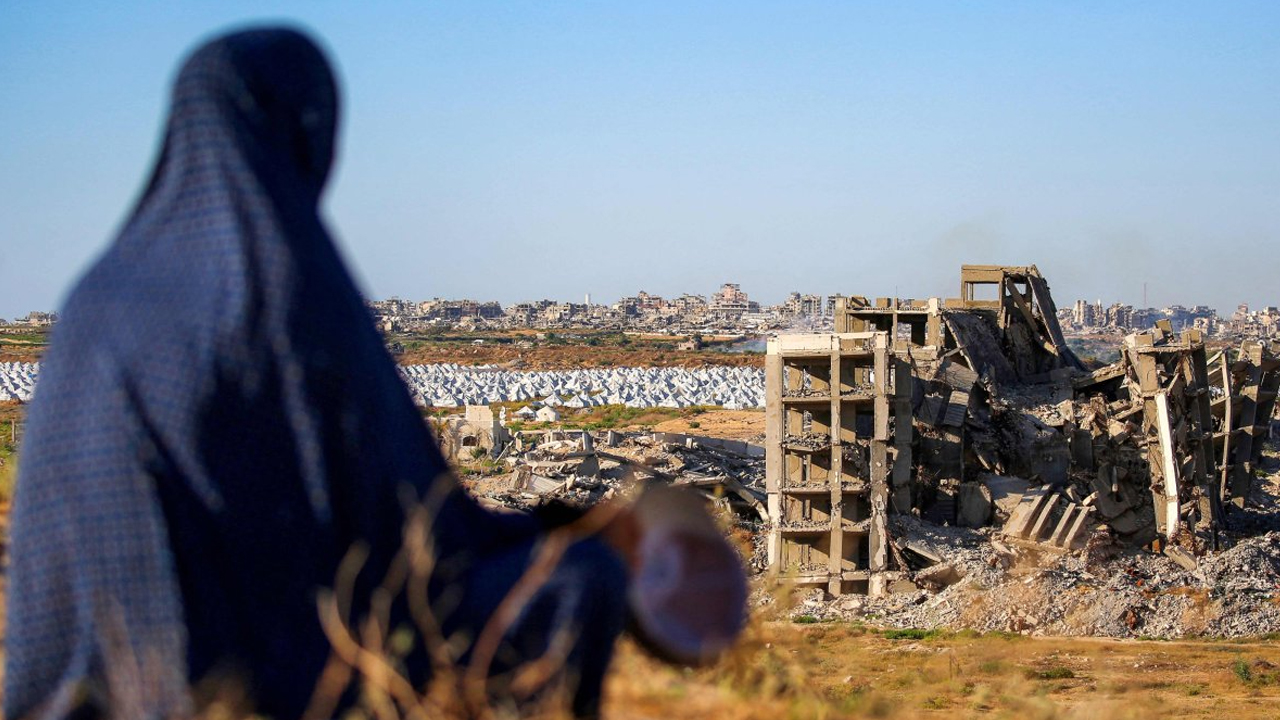
Israel's genocide in Gaza is now entering its third year. The military campaign has also expanded into the occupied West Bank, East Jerusalem, Syria, and Lebanon. Yet ordinary Arabs remain bewildered by the striking silence of their governments and the Arab League. Many cannot understand why Arab states have remained so passive.
Two groups possessed the greatest potential to change this situation: the Western and global powers on one hand, and Arab governments on the other. Instead, they have largely limited themselves to expressing concern, occasionally sending symbolic humanitarian aid, or convening meetings at the United Nations.
These gestures merely highlight their collective inaction. The Arab League, in particular, has become the embodiment of political paralysis. Although it claims to defend Arab interests, it has largely confined itself to issuing empty statements. Three key factors explain why the Arab world has remained so subdued.
The first is the colonial nature of governance across much of the Arab world. Arab states never fully escaped the legacy of colonial rule. Many of these countries were established after World War I primarily to serve foreign strategic interests, rather than reflecting the identities, rights, or aspirations of their own people.
As a result, Arab countries have failed to attain the level of strategic independence achieved by regional powers such as Iran or Türkiye. Despite possessing vast natural resources, strategic geography, and significant human capital, they have not developed true self-reliance.
Instead, they have become increasingly dependent on more powerful states, lacking the capacity to resist external political or military pressure. Even wealthy, energy-rich Arab nations remain reliant on foreign powers for security, finance, weapons, and advanced technology.
The genocide in Gaza has exposed how this deep dependence has eroded their sovereignty. Arab governments are no longer able to make independent decisions. They are reluctant to confront the United States or Israel because they understand the potentially devastating consequences.
The second reason is the fear among Arab rulers. The devastation witnessed in Palestine, Syria, Lebanon, Iraq, Yemen, Somalia, and Sudan serves as a constant reminder of the price that can be paid for defying neo-colonial powers or Israel.
Since the 1950s, Arab states have remained under the close scrutiny of major powers. They have been unable to escape the security and financial influence of the United States, the United Kingdom, France, and Russia.
In recent decades, regional powers such as Iran, Israel, and Türkiye have further complicated this landscape. Together, these external influences have significantly reduced the ability of Arab governments to make independent strategic decisions.
The United States has carefully constructed an extensive network linking Israel and Arab countries across critical sectors, including water, food, energy, transportation, and military security.
Beyond direct bilateral relations, institutions such as the World Bank, the United Nations, NATO, and the International Monetary Fund have also become part of this broader system of influence. Even American commercial banks and global payment networks are used as instruments of leverage. Countries that challenge Washington or Israel often face severe sanctions.
Any Arab state that seeks to move beyond rhetorical condemnation and directly confront the U.S.-Israel alliance risks paying an enormous price—from crippling economic sanctions to military intervention that could threaten its very existence and stability.
The third factor behind Arab inaction is the vast disconnect between governments and their people. Whether on domestic affairs or the Palestinian issue, government policies often bear little resemblance to popular sentiment. Many Arab states operate under what can be described as an "authoritarian social contract."
Governments provide basic necessities such as food, water, education, and healthcare, while citizens refrain from interfering in political decision-making. However, countries such as Yemen, Syria, Iraq, and Sudan have failed to meet even these basic obligations. Poverty, unemployment, and sectarian conflict have intensified, creating opportunities for foreign intervention and pushing many states toward collapse.
Having reported from the Arab world for more than six decades, I am convinced that governments, elites, and ordinary citizens alike remain deeply sympathetic to the Palestinian cause. They genuinely wish to support the Palestinians.
However, Israel's genocide in Gaza, along with its military attacks on Lebanon and Iran, has exposed a harsh reality: the priorities of rulers and those of their people are fundamentally different. When forced to choose between supporting Palestine and preserving their own power and security, Arab leaders consistently prioritize their own survival. Protecting their rule has become more important than defending Palestinian rights.
Over the past half-century, a neo-colonial order has become firmly entrenched across the region. Its primary objective is to safeguard the interests of Israel and its Western allies, while consistently marginalizing the rights of Arab states and their citizens.
Within this system, Arab governments are permitted to issue press statements, hold regional summits, organize demonstrations, send humanitarian aid, establish field hospitals, wear the Palestinian keffiyeh, wave Palestinian flags, and even vote against Israel at the United Nations.
What they are not permitted to do is mount meaningful military or economic resistance. Whenever anyone attempts to cross that line, they face bombing, sanctions, or even annihilation.
The Arab League follows these unwritten rules almost without exception because it largely reflects the priorities of the Arab regimes themselves. Its institutional structure also leaves it largely ineffective. Beyond relatively minor administrative matters such as postal arrangements or aviation agreements, the organization rarely achieves consensus on major political issues.
Another reason for Arab disunity over Gaza, Lebanon, and Iran is that, since 1979, most Arab governments have regarded Iran as their principal regional adversary. They are unwilling to strengthen resistance groups such as Hezbollah, Hamas, or the Houthis because of their close ties to Tehran. This strategic calculation has discouraged meaningful collective action.
However, the recent conflict involving Iran has revealed one important reality. The security umbrella that the United States and Israel promised to provide Arab states appears far less reliable than previously believed.
The consequences of this realization could prove far-reaching. In the coming years, Arab governments may reassess their security strategies and reconsider long-standing policies in pursuit of genuinely sovereign and secure states.