
Imposing Age Limit on Bar Enrollment: A Regression in Professional Freedom and Equality

The foundational essence of 'Law' embodies order and justice. The legal profession, often regarded as the mirror of society, serves as the ultimate sanctuary for upholding fundamental human rights and delivering justice.
Since the dawn of civilization, the practice of law has been recognized as an independent, merit-based, and fundamental vocation.
Almost every modern democratic state guarantees its citizens the unalienable right to pursue this noble career at any stage of life, provided they attain the required academic qualifications and pass the necessary bar examinations. In fact, globally, there remains no barrier to remaining actively engaged in the legal profession throughout one's lifetime.
Regrettably, a recent decision by the Bangladesh Bar Council has sent shockwaves through the legal fraternity and conscious civil society.
On August 6, 2026, the Legal Education Committee of the Bar Council proposed a maximum age limit of 35 years for enrollment as an advocate in the subordinate courts. Subsequently, on August 19, 2026, the 15-member Ad-hoc Committee of the Bar Council unanimously approved this recommendation, slated to take effect from January 1, 2030.
This decision, entirely contradictory to global realities, is not only discriminatory but also raises profound questions regarding institutional short-sightedness.
Global Precedents and Historical Evidences
A cross-national analysis of developed nations and neighboring countries reveals that a maximum age ceiling for bar enrollment is a non-existent concept.
India: In 1994, the Bar Council of India (BCI) attempted to introduce Rule 9, capping the enrollment age at 45. However, in the landmark 1995 judgment of Indian Council of Legal Aid and Advice v. Bar Council of India, the Supreme Court of India struck down the rule as illegal, arbitrary, and violative of the Indian Constitution. The apex court explicitly ruled that individuals can transition into law even after retirement, as age can never be a yardstick for merit.
Pakistan and Sri Lanka: Article 18 of the Constitution of Pakistan guarantees the fundamental right of every citizen to enter any lawful profession. Per Pakistan Bar Council (PBC) regulations, anyone with an LL.B. degree can enroll at any age upon clearing the bar exam. Similarly, Sri Lankan jurisprudence mandates no maximum age limit for qualifying as an Attorney-at-Law.
USA and UK: In the United States, there is no maximum age barrier to practicing law. Individuals can sit for the Law School Admission Test (LSAT), earn a Juris Doctor (J.D.) degree, and clear the State Bar Exam at any stage of life. In the United Kingdom (England and Wales), becoming a barrister or solicitor is entirely age-neutral. Mid-career transitions into law after decades in civil, corporate, or military services are highly commonplace and respected.
European Nations: Continental Europe, including France, Germany, and Italy, strictly adheres to age-neutral enrollment. The European Union’s anti-discrimination framework renders any professional exclusion based on age or gender unlawful.
Legal Jurisdiction and Theoretical Analysis
The classical philosopher Cicero famously asserted, "The good of the people is the chief law." Although the Bar Council relies on observations from a Supreme Court case (Civil Petition for Leave to Appeal No. 253/2014), the legal jurisdiction of this decision remains highly questionable.
Under Article 27(1)(b) of The Bangladesh Legal Practitioners and Bar Council Order, 1972, the law specifies only a minimum age of 21 years for enrollment. It maintains absolute silence on a maximum age ceiling.
It is a fundamental canon of statutory interpretation that a regulatory body cannot utilize its rule-making power (delegated legislation) to impose restrictions that contradict or exceed the parent act.
This decision is ostensibly Ultra Vires—beyond legal authority. The legal profession is not a routine public service entry; it is an independent arena of intellectual practice where arbitrary barriers cannot block merit.
The renowned US Supreme Court Justice Felix Frankfurter achieved his greatest judicial heights well after mid-life, proving that mature life experiences profoundly enrich legal interpretation.
When individuals from the military, civil bureaucracy, banking, or academia wish to dedicate their post-retirement experience to public welfare through law, why should they be structurally barred? This artificial wall of 35 years will deprive our judiciary of seasoned intellects, compromising the qualitative standard of our legal ecosystem.
The Administrative Flaw and Public Repercussions
As a specialist in criminology, governance, and human rights, I view the political and social repercussions of this discriminatory decision with deep concern. At a time when the government is striving to ensure inclusive growth, employment, and good governance, such an undemocratic institutional mandate risks undermining public confidence and inviting widespread criticism.
This decision has naturally triggered resentment among thousands of educated youths and professionals aspiring to transition into law. It forces one to examine whether this counter-productive policy reflects a deeper, short-sighted administrative oversight designed to alienate the public from state institutions.
Whether hidden factions within or outside the administration are inadvertently sabotaging public trust through such controversial steps is a matter that demands close state scrutiny and deep introspection.
Conclusion
The practice of law is a lifelong commitment to knowledge and humanitarian service; it cannot be confined within an artificial demographic framework. In an era where global governance champions equality, inclusion, and human rights, Bangladesh cannot afford to embrace a regressive, discriminatory policy.
It is hoped that the government and relevant authorities will examine the negative ramifications of this policy error. To preserve the dignity of our legal system, honor merit, and ensure good governance, the immediate withdrawal of this arbitrary 35-year ceiling is the need of the hour. Justice must never be caged within the confines of an age bracket.
_____________________________________________
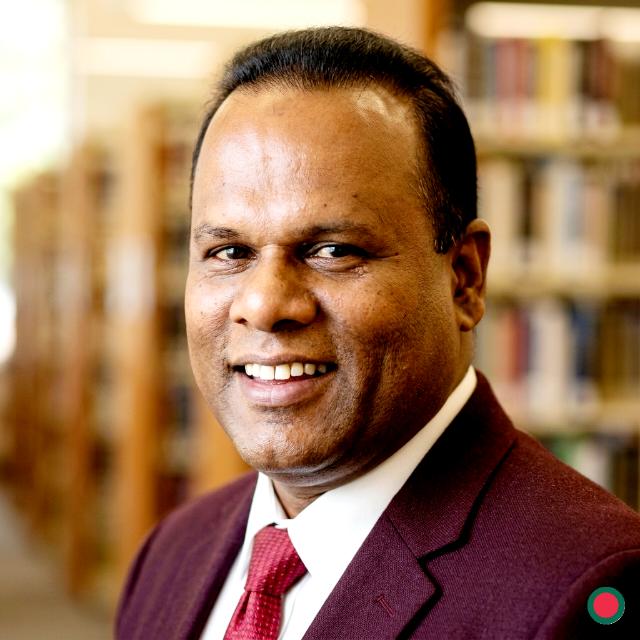
About the author: Prof. Dr. Sheikh Asif S. Mizan
Vice-Chancellor, Daaru Salaam University, Mogadishu, Somalia; Expert in Criminology, Governance, and Human Rights