
Prime Minister of the Nation, Not Just a Party: Tarique Rahman Proves His Intent Through Action

The ultimate test of statecraft lies not merely in acquiring power, but in how that power is exercised with restraint, vision, and moral clarity. A political figure may lead a party, but upon assuming the office of Prime Minister, their constitutional and ethical mandate expands to encompass the guardianship of the entire nation.
An analysis of Prime Minister Tarique Rahman’s governance style, policy framework, and practical execution reveals a clear message: he is transcending political partisanship to establish himself as a Prime Minister for all citizens. Since assuming office on February 17, 2026, this shift toward inclusive leadership has become the defining hallmark of his administration.
The Indivisible Boundary Between Party and State: The Theoretical Basis of Good Governance
In his seminal work Politics, Aristotle noted that the true purpose of a state is not merely survival, but ensuring a noble and dignified life for its citizens. This timeless principle forms the bedrock of modern good governance. A nation belongs neither to a single political party nor an elite faction; it is a collective framework guaranteeing equal rights, fundamental security, human dignity, and economic opportunity for all.
Since taking office, Prime Minister Tarique Rahman has repeatedly reinforced this universal principle. He has unequivocally declared that every citizen—whether they voted for the Bangladesh Nationalist Party (BNP), voted against it, or abstained entirely—holds an equal and unalienable claim on the state.
Reaffirming this stance during a recent speech in Rajshahi, he emphasized that safeguarding the constitutional rights of every individual, regardless of religion, ethnicity, caste, or profession, is a sacred duty of the state. This is not mere political rhetoric; it is an indispensable moral benchmark for effective democratic governance.
In Development as Freedom, Nobel laureate Amartya Sen posited that true development extends beyond Gross Domestic Product (GDP) growth to encompass the expansion of human capabilities. A state succeeds when its most vulnerable citizens gain equitable access to healthcare, education, legal protection, and economic opportunity.
Viewed through this lens, the current administration’s social safety initiatives carry significant weight. Targeted measures—such as the Family Card, Farmer Card, agricultural loan waivers of up to BDT 10,000 for smallholders, and accessible credit facilities for female and young entrepreneurs—are actively transforming the state into a reliable partner in the daily struggles of its citizens.
From Promises to Implementation: Administrative Accountability
In politics, articulating grand visions is easy; implementing them requires rigorous discipline. Italian political theorist Niccolò Machiavelli observed the complexities of power, while German sociologist Max Weber famously described politics as "a slow, powerful drilling through hard boards."
Authentic leadership demands more than stirring public emotion—it requires patience, long-term vision, and uncompromising moral accountability to steer a nation forward.
At the onset of its mandate, the administration identified three immediate priorities:
Stabilizing consumer markets and controlling inflation on essential commodities
Restoring visible law and order across the country
Ensuring a stable and uninterrupted energy and power supply
These are not routine administrative tasks; they address the immediate survival and well-being of the public.
Measures aimed at dismantling market syndicates, taking a firm legal stance against hoarders, and strengthening consumer rights protection are timely and essential.
Furthermore, pilot initiatives delivering direct assistance to low-income households through the Family Card scheme demonstrate tangible progress toward administrative integrity and responsive governance.
Human-Centric Governance and Marginalized Inclusion
The truest measure of good governance is whether state resources and policies reach the last person in line. Prime Minister Tarique Rahman has repeatedly stressed in public addresses that sustainable development cannot occur while leaving any region or population behind.
For instance, increased budgetary allocations targeting balanced development in the Rangpur region, alongside plans to strengthen rural infrastructure at the upazila and village levels, demonstrate a shift away from Dhaka-centric growth models.
Similarly, healthcare reforms under his direction take a long-term approach. The administration has announced concrete plans to expand bed capacities in all upazila health complexes, establish specialized pediatric and maternal wards, and introduce localized dialysis services for kidney patients over the next five years.
Aligned with the Universal Declaration of Human Rights, which recognizes health as a fundamental human right, bringing modern medical care directly to rural communities actively advances social justice.
Communal Harmony and the Rule of Law
Bangladesh has historically been a pluralistic society where Muslims, Hindus, Buddhists, and Christians have coexisted peacefully for generations. Protecting this harmony and ensuring the safety of every citizen remains a paramount obligation of the state.
Prime Minister Tarique Rahman reinforced national unity with his universal message: "Faith belongs to the individual; the state belongs to all."
According to political scientist Francis Fukuyama, a stable state rests on three pillars: strong state capacity, the rule of law, and political accountability.
The government has repeatedly stated that governance will be dictated by the rule of law rather than partisan influence or coercion—a principle reflected in recent strict organizational directives enforcing discipline within political and administrative spheres.
Conclusion: History Judges Action, Not Rhetoric
History does not remember statesmen by their titles alone, but by their courage, integrity, and lasting contributions. As Mahatma Gandhi famously remarked, "The best way to find the future is to create it."
Today, Bangladesh stands at a critical juncture, navigating democratic renewal, economic restructuring, and the imperative of good governance.
Evaluating the early phase of Tarique Rahman’s tenure demonstrates an earnest effort to build public trust through tangible delivery rather than empty promises.
By rising above partisan divides and advancing inclusive, universal policies, he is setting a benchmark for national leadership—one that offers promising prospects for the future of democratic governance in Bangladesh.
_________________________________________________________
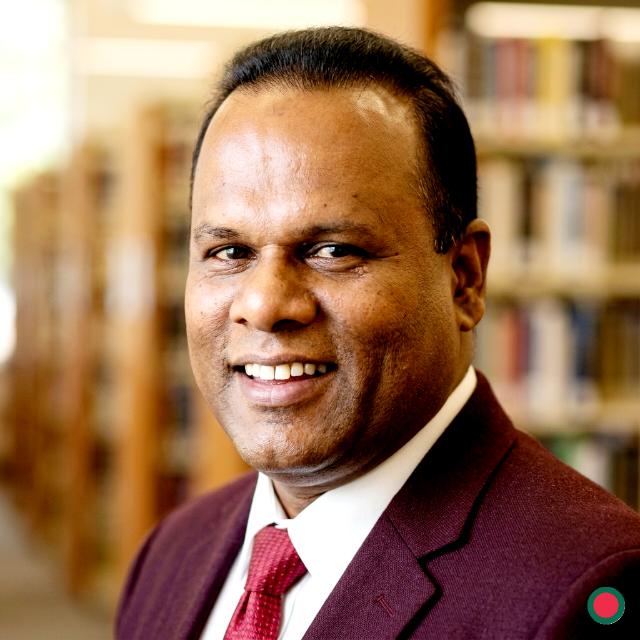
About the Author: Prof. Dr. Shaikh Asif S. Mizan is the Vice-Chancellor of Daaru Salaam University, Somalia, and an expert in Criminology, Governance, and Human Rights