
Iran's 'Verse Diplomacy' at Khamenei's funeral sends message to world
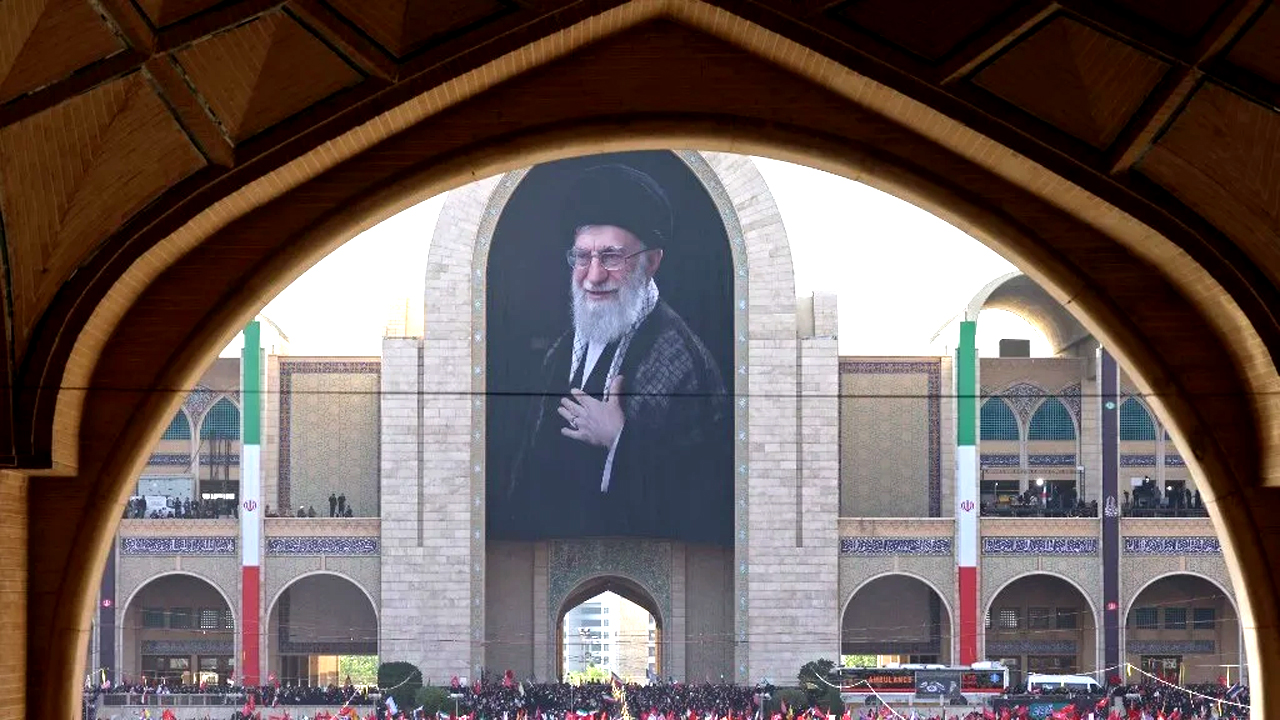
As the Saudi delegation stepped forward to pay their respects to the coffin of Iran's late Supreme Leader, Ayatollah Ali Khamenei, at Tehran's Grand Mosalla, one detail drew widespread attention: the specific Qur'anic verse being recited.
The recitation was from Surah Aal-e-Imran, verse 13, which recounts the Battle of Badr. In that battle, a small and lightly armed Muslim force defeated a much larger army by the will of Allah. Many observers believe the choice was highly symbolic in the current context, suggesting Iran's victory in its confrontation with the United States and Israel.
The Battle of Badr took place in 624 CE in what is now Saudi Arabia. This has prompted questions: Was the recitation a gesture of praise toward Saudi Arabia, a subtle rebuke, or perhaps both? What appears certain is that the selection of the verse was far from accidental. Viewed generously, it evokes one of Islam's earliest victories and may reflect a shared civilizational heritage between Tehran and Riyadh.
The reality, however, is that Iran not only survived the war but emerged stronger than before. Control over the Strait of Hormuz now appears to be almost assured for Tehran.
Meanwhile, Saudi Arabia openly aligned itself with the United States during the conflict. Some unverified reports even alleged that it secretly participated in strikes against Iran.
Against this backdrop, the tone of the verse appears particularly pointed. As Israel pushed the region toward the brink of destruction, Riyadh either remained a silent observer or worked against Iran. Tehran, by contrast, confronted its adversaries directly while simultaneously delivering a message to those who had maintained close ties with its enemies.
Saudi Arabia was not the only country to send a delegation. More than 30 delegations traveled to Tehran to pay their final respects to Khamenei. The long list of distinguished visitors underscored Iran's influence. Despite efforts by the United States and Israel to isolate Iran, the country was clearly not alone.
Khamenei was killed on February 28, 2026, in a joint U.S.-Israeli strike on his residence in central Tehran. His 14-month-old granddaughter, son-in-law, and daughter-in-law were also killed in the attack.
His body lay in state for three days at the Grand Mosalla, Iran's largest prayer complex and the venue for major state ceremonies.
The funeral was far more than a religious event; it was also a carefully orchestrated political display. Through the ceremony, Iran sought to reassure its people that the state remained capable of uniting the nation in both victory and mourning. It reassured its allies that it had not collapsed, demonstrated resilience to major powers, and warned its rivals that Tehran keeps account of every action taken against it.
By carefully selecting Qur'anic verses, Iran delivered distinct symbolic messages to each visiting delegation. The verses reflected Tehran's wartime objectives and conveyed how it viewed each country's position during the conflict. A close examination reveals a clear hierarchy in this "verse diplomacy."
The Axis of Resistance: A New Vision of Victory
For Hamas, Palestinian Islamic Jihad, Hezbollah, the Houthis, Iraq's Popular Mobilization Forces (Hashd al-Shaabi), and Afghanistan's Taliban, the selected verses revolved around martyrdom, steadfast commitment to Allah, and ultimate victory.
Hamas was welcomed with a verse describing those who fulfilled their covenant with Allah. Among them are those who attained martyrdom, while others continue to wait, yet none have altered their commitment.
For Hezbollah, the recited verse promised believers ultimate triumph, emphasizing that military setbacks are part of a divine cycle through which Allah chooses martyrs and distinguishes true believers.
For Yemen's Houthis, Surah Al-Fath, verse 29 was recited. It emphasizes loyalty, discipline, and growth through hardship, describing the Prophet Muhammad's companions as firm against disbelievers and compassionate toward one another. The verse provides the Houthis with a strong ideological foundation.
For Iraq's Hashd al-Shaabi and the Iraqi delegation, the famous verse declaring that those killed in the path of Allah should not be considered dead—but rather alive, though people do not perceive it—was recited.
Palestinian Islamic Jihad and the Taliban both received the opening verses of Surah Al-Fath, which speak of a "clear victory" and Allah's promise to forgive past shortcomings and complete His favor. Using the same verses for two very different movements may have implied that just as the Taliban defeated the United States, Palestinians would ultimately prevail against Israel.
State Allies
The second verses chosen for Russia, China, India, and Egypt carried a noticeably calmer tone. They focused on honesty, reassurance, and divine reward rather than warfare.
For Russia, the recited verse spoke of the eternal home of the Hereafter, declaring that the final outcome belongs to those who neither seek arrogance nor spread corruption on earth.
China received an even gentler verse stating that Allah grants glad tidings and reassurance, and that victory comes only from Him.
Part of the verse recited for Hezbollah was also used for India, specifically the passage encouraging believers not to lose heart or grieve. References to martyrs or wrongdoers were omitted.
For Egypt, the chosen verse declared that those who believe and perform righteous deeds are the best of creation and will dwell eternally in Paradise.
Although these countries conferred legitimacy upon Iran by attending the funeral, they were not direct participants in its military campaign. Accordingly, the selected verses expressed gratitude rather than a call to battle.
Regional Partners
The first verses selected for Qatar, Türkiye, Pakistan, and Egypt represented an intermediate level. They conveyed praise and welcome without placing these countries within the "Axis of Resistance."
Qatar, which played a significant mediating role, received the "clear victory" verse, interpreted here as recognition of its diplomatic achievements.
For Türkiye, the recited verse declared that those who strive with their wealth and lives are superior to those who remain behind. Although Türkiye did not participate directly in the war, President Recep Tayyip Erdoğan publicly condemned Israel as "warmongering" and issued strong warnings.
Pakistan received a supplication: "My Lord, grant me an honorable entrance and an honorable exit." From the beginning of the conflict, Islamabad and Doha remained active diplomatically. Pakistan's government reportedly sought to leverage then-U.S. President Donald Trump's personal relationship with Pakistani leaders to facilitate communication between Washington and Tehran, an effort that reportedly angered Israel.
For Egypt, the first verse promised Paradise to the righteous. It was a reward-centered passage devoid of military imagery, though it also carried an implicit rebuke—similar to the messages directed at Saudi Arabia and the Lebanese government. While Hezbollah was praised, Lebanon's government was criticized.
For the Lebanese government, Surah An-Nisa, verse 66 was recited, stating that if people had been commanded to sacrifice themselves or leave their homes, only a few would have obeyed, and that following divine guidance would have been better for them.
The implication was unmistakably severe. Critics argue that the Lebanese government failed to take a sufficiently courageous stand against Israeli occupation, while criticizing Hezbollah's retaliatory actions. Iran's message appeared to be that Lebanon's government had failed to make the necessary sacrifices in a time of crisis.
About the Authors: Alice Gévory is a journalist based in Istanbul who primarily covers the Balkans, Türkiye, and the Middle East.
Marwa Koçak is a journalist and translator with a particular interest in Middle Eastern affairs.