
Tarique Rahman's visit will further deepen Bangladesh-China relations
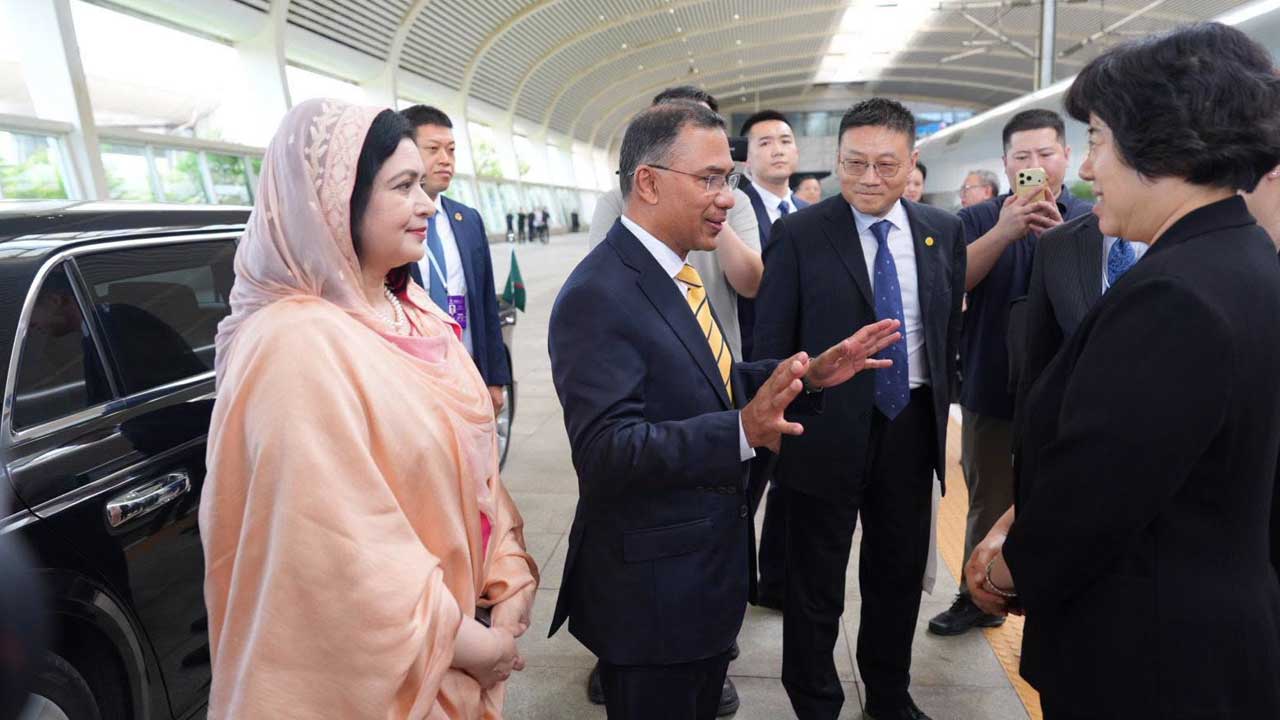
Bangladesh Prime Minister Tarique Rahman is visiting China from June 24 to 26. This is his first foreign trip since assuming office and his second overseas destination.
The visit has attracted significant attention in the Bangladeshi media. Various media outlets speculate that more than 15 bilateral agreements may be signed during the visit, including major infrastructure and industrial projects.
China and Bangladesh are traditional friends, neighbors, and strategic cooperative partners. For more than five decades since the establishment of diplomatic relations, the two countries have advanced their ties based on the Five Principles of Peaceful Coexistence. Through mutual respect, equality, and cooperation, they have created a model of partnership among developing countries.
Politically, the two countries maintain regular high-level exchanges. In 2024, bilateral relations were elevated to a Comprehensive Strategic Cooperative Partnership.
Economically, China has remained Bangladesh's largest trading partner for 15 consecutive years. China has also granted duty-free access to all Bangladeshi exports. In terms of infrastructure development, major projects such as the Padma Bridge have played a significant role in improving Bangladesh’s transportation system.
At the regional level, China and Bangladesh have worked together to maintain peace and stability while addressing the Rohingya crisis.
Cooperation under the Belt and Road Initiative (BRI) has helped strengthen regional connectivity networks. In addition, various platforms have been established with other South Asian countries to promote poverty reduction and improve regional governance.
Despite these achievements, several challenges remain in taking China-Bangladesh relations to a higher level.
The first challenge is the impact of geopolitical competition.
Some major powers seek to incorporate Bangladesh into their own security and development frameworks. At the same time, they attempt to influence the country's internal affairs, pressure it into signing unequal agreements, and use narratives such as the “debt trap” to cast doubt on China-Bangladesh cooperation projects.
The second challenge is Bangladesh’s domestic political stability and policy continuity. The third challenge stems from differences in perception. Public understanding of China in South Asia remains limited. Some segments of Bangladesh’s elite are deeply influenced by Western development models. They often follow Western economic theories and governance systems while maintaining a cautious attitude toward China's development path and production-capacity-based cooperation.
On the other hand, some elites acknowledge the benefits of China’s development model and cooperation but remain concerned about potential reactions from the United States and other Western countries. Furthermore, in some domestic discussions, Bangladesh’s trade deficit is attributed solely to the “flood of Chinese goods,” while structural factors such as the country’s limited export diversification and production capacity are often overlooked.
However, overcoming these challenges is not impossible. It requires greater wisdom and patience from both sides. In particular, narrowing the perception gap calls for more open dialogue and exchanges. At the same time, Bangladesh’s policymakers must demonstrate the political courage to genuinely prioritize a “Bangladesh First” policy.
Prime Minister Rahman’s visit will highlight to both countries and the international community the depth of Bangladesh’s commitment to cooperation with China.
Based on discussions in the Bangladeshi media surrounding the visit, it appears that both countries are moving toward closer economic and strategic coordination.
First, industrial cooperation is expected to be strengthened. China has been encouraging its companies to establish manufacturing bases in Bangladesh, taking advantage of the country's labor-cost competitiveness to produce export-oriented, higher value-added products.
Second, cooperation at the Global South and regional levels is likely to increase, facilitating Bangladesh’s integration into Asian industrial chains and multilateral frameworks.
Platforms such as the China-South Asia Expo and the China-Pakistan-Bangladesh trilateral cooperation mechanism could serve as bridges connecting Bangladesh with other regional economies.
Finally, the two countries may strengthen exchanges on governance issues to help Bangladesh explore a development path suited to its national realities. There is considerable potential for expanding institutional communication and experience-sharing among political parties, think tanks, and local governments. There is no universal model of development.
Bangladesh possesses the conditions and capabilities necessary to pursue a path of modernization that combines lessons from both Eastern and Western experiences.