
How China performing in air defense equipment market
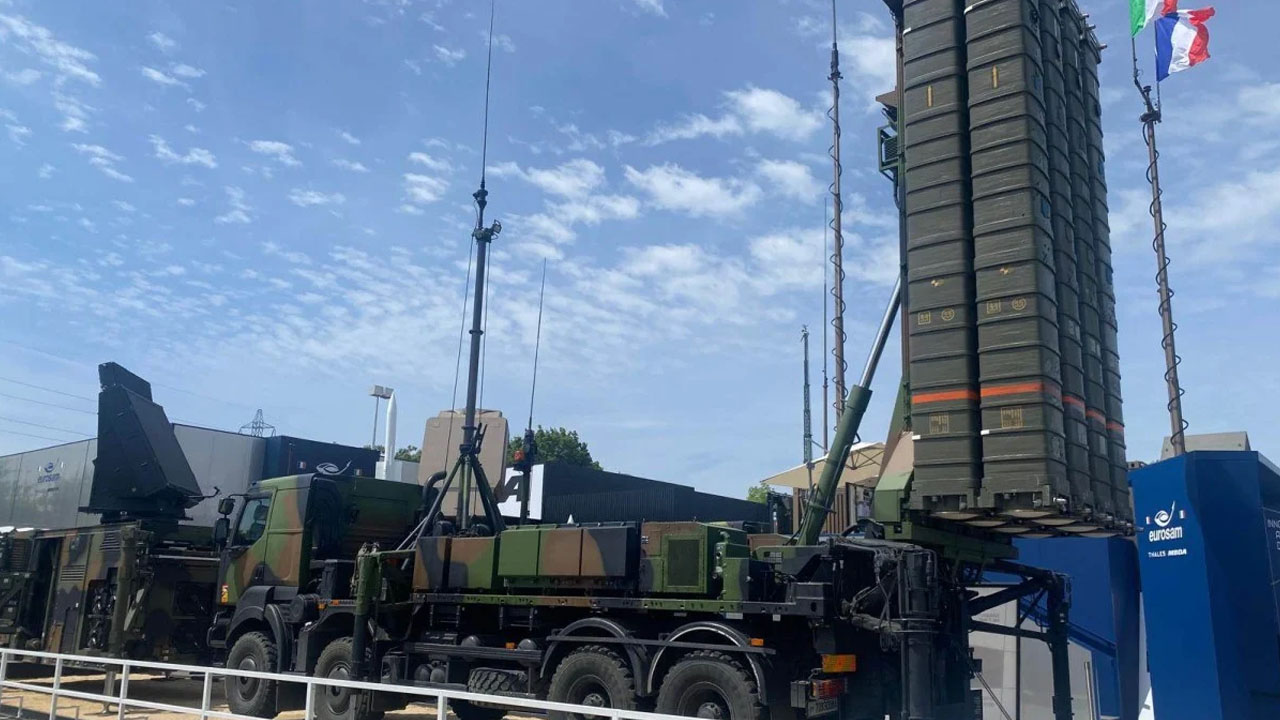
At the recently concluded Eurosatory defense exhibition in Paris, Chinese arms manufacturers showcased their products alongside leading global defense companies. As drone warfare in Ukraine and the Middle East has underscored the growing importance of air defense systems, this year's exhibition placed particular emphasis on advanced air defense technologies.
Experts say China is well positioned to secure orders from countries in the Global South because of its competitively priced systems. However, geopolitical considerations are expected to prevent U.S. allies from purchasing Chinese weapons. Instead, they are looking for combat-proven technologies that are compatible with their existing defense infrastructure.
China's largest defense manufacturer, Norinco (North Industries Group Corporation), displayed several surface-to-air missile systems, including the Sky Dragon 100 and Yitian-2. The company also exhibited anti-drone technologies such as anti-aircraft guns and laser weapons.
Chinese air defense systems have already been exported to several countries. Reports indicate that the HQ-9 long-range missile system has been sold to Azerbaijan, Egypt, Pakistan, Turkmenistan, and Uzbekistan. Although Chinese weapons have only a limited presence in Europe, Serbia currently operates the export version of the HQ-22, known as the FK-3.
Developing surface-to-air missile systems is an exceptionally complex task. It requires high-performance radar systems and advanced interceptor missile technology, which is why only a handful of countries possess the capability to export such systems.
U.S. defense giant Lockheed Martin showcased the THAAD and PAC-3 MSE missile systems at the exhibition. The PAC-3 MSE is an upgraded version of the earlier PAC-3, offering up to 50 percent greater range. The company also displayed the Patriot missile interceptor, which is currently operated by a U.S. Army unit stationed in Germany.
Eurosam, a joint venture involving France, Italy, and Thales Group, presented its advanced SAMP/T NG air defense system with a range of 150 kilometers. The company said it has already secured orders from France and Italy and expects deliveries to begin by the end of this year.
The recent tensions between Iran and Israel highlighted the widespread use of inexpensive, slow-moving Shahed drones alongside high-speed cruise and ballistic missiles. According to Lami Kim, a defense expert at the International Institute for Strategic Studies (IISS) in London, the wars in Ukraine and the Middle East have significantly increased global demand for air defense systems.
Kim noted that existing missile stockpiles have been substantially depleted. The United States and European countries have supplied air defense systems to Ukraine, while the U.S. has also delivered similar systems to Israel. She added, "During the recent conflict involving Iran, the United States and Gulf countries used a large number of interceptor missiles. Those inventories now need to be replenished."
Nataliia Butyrska, Senior Fellow at the New Europe Center in Kyiv, said the war in Ukraine has dramatically increased both the importance of and demand for air defense systems worldwide. However, European countries are struggling to rapidly expand production of these systems and interceptor missiles.
According to Butyrska, "The war in Ukraine has demonstrated that modern conflicts involve coordinated missile and drone attacks. Countering such threats requires integrated, multilayered air defense systems capable of engaging targets at different ranges and altitudes."
As a result, European countries are increasingly focusing on building integrated air defense networks rather than relying on isolated solutions.
This year's exhibition also featured several emerging competitors in the air defense market, with South Korea attracting particular attention through its M-SAM and L-SAM systems.
These systems form part of Seoul's multilayered missile defense architecture designed to counter North Korea's missile threats.
The M-SAM is capable of intercepting medium-range threats at distances of up to 50 kilometers. It was reportedly used by the United Arab Emirates during Iranian drone and ballistic missile attacks, achieving a reported success rate of 96.7 percent, intercepting 29 out of 30 incoming targets. Saudi Arabia has already ordered ten units, while Iraq has placed an order for eight.
The L-SAM, with a range of 150 kilometers, is designed to counter long-range aerial threats. Development of the L-SAM Block I was completed last May, and the system is expected to enter service with the South Korean military by 2028.
South Korea's largest defense company, Hanwha, showcased its H-SHORAD counter-drone system. This low-altitude air defense platform integrates radar, a 30 mm cannon, guided missiles, and electronic jammers into a single system.
A Hanwha Aerospace official attending Eurosatory, speaking on condition of anonymity, argued that South Korean systems could be more suitable for Europe than America's Patriot or PAC-3. "American systems are extremely expensive," the official said. "The United States has used them extensively during the Iran conflict, reducing its export inventory. We are highlighting our strengths, and several European countries have shown strong interest."
Another South Korean defense company, LIG Defense & Aerospace, is also expanding its footprint in Europe. On June 15, German defense manufacturer Rheinmetall announced a strategic partnership with LIG to jointly develop air defense systems for Europe and NATO.
Lami Kim noted that despite their high cost, demand for these systems is likely to remain strong, at least until more affordable and effective counter-drone technologies become widely available.
She added, "Ultimately, we are likely to see a combination of traditional high-end air defense systems alongside new technologies such as electronic warfare equipment and laser weapons to counter drones." She also observed that while South Korean air defense systems have yet to establish a major presence in Europe, they could help fill Europe's significant capability gap in defending against long-range ballistic missiles.
Liselotte Odgaard, Senior Fellow at the Hudson Institute in Washington, said air defense systems are no longer considered elite capabilities reserved for a few nations. Given the increasing frequency of drone and missile attacks, they have become essential for all countries.
She categorized the competitive landscape into three tiers:
The top tier consists of the United States, Israel, and Europe.
The middle tier is occupied by South Korea.
China serves the Global South by offering more affordable alternatives.
Bence Németh, Senior Lecturer at King's College London, said China will continue to play an important role as a supplier to countries in the Global South. However, its prospects vary across different markets because major buyers evaluate more than just technical specifications. They also place significant emphasis on combat experience, maintenance capabilities, and long-term logistical support.
Németh explained that U.S. and Israeli systems benefit from extensive battlefield experience. South Korean systems are steadily gaining credibility, while European technologies enjoy advantages through NATO interoperability and political trust.
He believes that air defense systems will become one of the fastest-growing segments of the global defense market. Companies capable of delivering cost-effective solutions will enjoy a significant competitive advantage. He also argued that demand will increasingly shift toward integrated defense networks rather than standalone platforms.
Nataliia Butyrska concluded that the strong presence of the United States and South Korea at Eurosatory reflects intensifying competition within the European market, where South Korea has emerged as an important new player. In her view, China's market will remain largely concentrated in the Global South, where its affordable pricing and flexible procurement terms will continue to attract customers.
She further noted that combat experience and operational effectiveness have become the most important factors in today's conflicts. South Korea's M-SAM has earned a reputation for reliability while remaining less expensive than comparable American systems. By contrast, Iran's air defense network, built with Russian and Chinese components, proved largely ineffective against the precision strikes carried out by the United States and Israel.