
Zohran Mamdani: The New Generation's 'Daredevil'?
If you are not an obsessive fan of the Marvel Cinematic Universe like I am, you are probably unfamiliar with Wilson Fisk, better known as Kingpin. He is an extraordinarily corrupt and ruthless villain whose sprawling criminal empire ultimately carries him all the way to the office of mayor of New York City.
Many have compared Fisk's rise to the mayoralty of New York with the political ascent of U.S. President Donald Trump. In the deeply corrupt world of American politics, such a storyline feels almost natural—at least in fiction. The only person capable of stopping Fisk's rise was the blind lawyer Matt Murdock, also known as Daredevil.
Blinded in a childhood accident, Daredevil acquires extraordinary superhuman abilities. He embodies the desperate longing shared by generations of Marvel fans for someone who can stand up to Fisk's corruption.
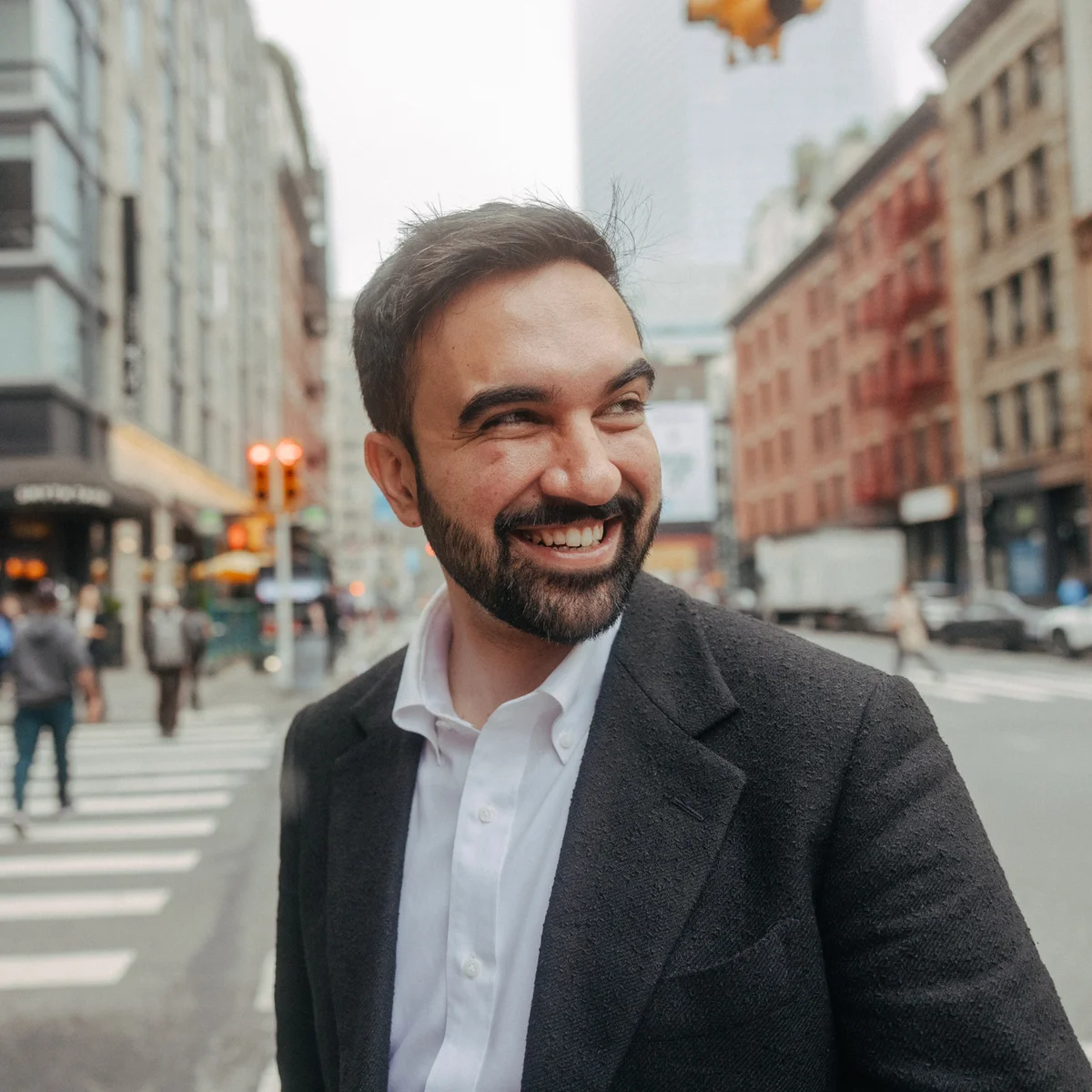
Then came Zohran Mamdani. He is New York's real mayor. His rise to power can only be imagined alongside Murdock's transformation into a superhero.
Murdock's moral courage and unwavering conviction are reflected in Mamdani. That conviction has now been translated into real political power in New York City. There is, however, one small difference between them: Murdock is a Catholic Christian, while Mamdani is a Shia Muslim.
Mamdani appears to unite the stark duality represented by Fisk and Murdock. He is now a mayor deeply loved and respected by many people, while simultaneously striking fear into genocidal Zionists and corrupt Democratic Party politicians.
Meet the Kingmaker
A recent New York Times headline captured both alarm and reluctant admiration. It read: "Mamdani Emerges as a Kingmaker, Delivering Big Primary Wins for Fellow Democrats."
Behind that carefully worded praise lay a quiet truth: genocidal Zionists are losing control of a city they believed belonged to them. It is not their city, and it never truly was.
In fact, The New York Times is something of a misnomer. It might more accurately be called the Tel Aviv Times. The name would certainly have a better ring to it.
According to the newspaper, "Mayor Zohran Mamdani has shaken the Democratic establishment by helping elect three progressive candidates."
That statement is entirely accurate. Brad Lander, Claire Valdez, and Daryalisa Avila Chevalier represent the crest of this political transformation. They have profoundly unsettled The New York Times and many of its readers.
Last week, these three courageous and combative candidates won their Democratic primaries, defeating opponents deeply entrenched in the Democratic Party's corrupt political machinery.
Their victory celebrations echoed with chants of "Free, Free Palestine," interspersed with chants of "DSA" (Democratic Socialists of America). New York is unmistakably changing—and perhaps the entire country is changing with it.
Consider what Mamdani has accomplished in just a single month. At the end of May, he had the courage to boycott New York's "Israel Day Parade," where Israel's far-right Finance Minister Bezalel Smotrich—an outspoken supporter of Israel's genocidal war—was in attendance.
Then, on June 18, Mamdani described AIPAC, one of America's most influential pro-Israel lobbying organizations, as a "dark money monster." Only days later, three strongly anti-Zionist candidates backed by him won decisive victories in Democratic primaries. It marked a profound political shift.
Is National Change Coming?
A significant part of this new political coalition consists of Jews, Christians, Muslims, African Americans, and Arabs. Virtually every community is represented. At the center of their political mobilization stands the issue of Palestine. The Palestinian struggle for national liberation has finally found a strong political foundation in the United States.
Mamdani speaks with remarkable clarity, unlike Barack Obama, who often avoided direct answers. Mamdani says he does not believe in any state that grants one religion privileged status over another—whether Jewish, Islamic, or Christian.
Genocidal Zionists gnash their teeth in anger, but the world keeps moving forward. The conversation has shifted. Candidates endorsed by Mamdani are steadily advancing toward seats in the U.S. Congress despite intense political resistance.
Although Palestine lies at the heart of this unprecedented progressive movement, it is important to recognize that the cause is deeply connected to a broader agenda addressing the everyday concerns of working people while empowering the city's extraordinarily diverse population.
For generations, pro-Israel propaganda cultivated anti-Palestinian racism. Today, Palestinians have become part of the shared political consciousness of America's working and middle classes.
The central question confronting pro-Israel Democrats is whether this democratic uprising against corruption and political cowardice will remain confined to New York—or spread across the country.
Michigan is currently witnessing a heated Democratic Senate primary. AIPAC-backed candidate Haley Stevens, who once declared that "Israel comes to me in my dreams," faces Dr. Abdul El-Sayed, who is campaigning for universal healthcare, the abolition of Immigration and Customs Enforcement (ICE), and an end to U.S. arms sales to Israel.
Mainstream Democrats—many of whom are financially supported by AIPAC—are visibly anxious about the race. The New York Times shares that concern. Columnist Michelle Goldberg wrote, "Mainstream Democrats have every reason to worry about this race. I certainly do."
Proof Through Action
Genocidal Zionism is losing its grip on American public opinion. The shift is unmistakable.
Even as Goldberg struggled with the implications of the Michigan contest, new developments emerged from Colorado. There, mainstream Democrats found themselves facing similar concerns.
In Denver-area primaries, 29-year-old democratic socialist Melat Kiros defeated Diana DeGette by a wide margin. DeGette is widely regarded as another prominent AIPAC ally.
According to The New York Times, Kiros highlighted in her campaign biography that she had previously worked at a Manhattan law firm. She refused to remove a letter questioning Israel's historical legitimacy, supported pro-Palestinian student activists, and protested the firm's treatment of activist law students. As a result, she was dismissed from the firm in 2023.
So what comes next? New York is supposedly "too communist," Michigan "too Arab." And Colorado? Is it simply "too mountainous"?
The issue must be understood in light of people's real needs and aspirations. The strongest evidence for Mamdani's democratic socialist project lies in his record.
Within only a few months in office, he has fought relentlessly for workers and tenants. He secured $1.2 billion in state funding for universal childcare, recovered more than $9 million in compensation for workers and small businesses, negotiated a $31 million settlement for tenants, and still managed to eliminate the city's $12 billion budget deficit.
When it comes to the Gaza genocide and Palestinian rights, Mamdani and the candidates he supports are weaving these issues into the very fabric of a new American politics. Their opponents in both Israel and the United States dismissed this movement as too weak to deserve serious attention. They were profoundly mistaken.
To appreciate the significance of Mamdani's leadership, one need only compare him with his predecessor, Eric Adams. Adams resigned in disgrace before traveling to Israel, where he declared: "As mayor, I served you."
A defining aspect of Daredevil's moral philosophy is his religious faith. As a devout Catholic, although he takes the law into his own hands, he refuses to kill those he confronts. Instead, he beats them severely enough to send them to the hospital, giving them the opportunity to repent.
This is what distinguishes him from Frank Castle, the Punisher, who has no hesitation in killing villains. Their philosophical disagreement has produced one of the Marvel Cinematic Universe's most compelling ethical debates.
Today, our own moral universe is likewise attempting to redefine its understanding of right and wrong. We should keep our eyes on Mayor Mamdani—the Daredevil mayor—and hope that he succeeds in reshaping the moral fabric of his city, and perhaps even the entire nation.
About the Author
Hamid Dabashi is the Hagop Kevorkian Professor of Iranian Studies and Comparative Literature at Columbia University in New York City, where he teaches comparative literature, world cinema, and postcolonial theory.
His recent books include After Savagery: Gaza, Genocide, and the Illusion of Western Civilization (2025), Iran in Revolt: Revolutionary Aspirations in a Post-Democratic World (2025), The Persian Prince: The Rise and Resurrection of an Imperial Archetype (2023), The Future of Two Illusions: Islam After the West (2022), and Reversing the Colonial Gaze: Persian Travelers Abroad (2020). His books and essays have been translated into numerous languages.