


Israel–Palestine conflict turned World Cup final into a political showdown
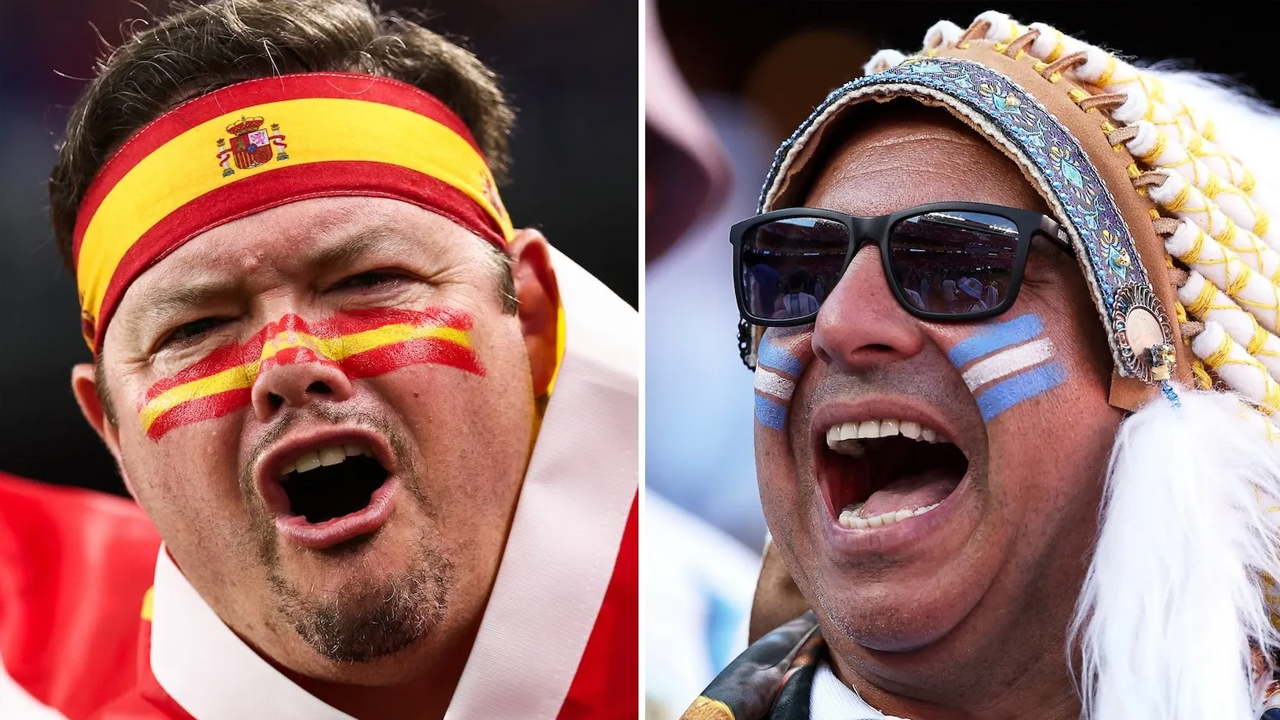
As media outlets around the world dissect every tactical detail of the 2026 FIFA World Cup final, one thing has become increasingly clear: for many fans, the blockbuster clash between Spain and Argentina is about far more than footballing supremacy or national pride.

Across social media platforms, thousands of users are portraying the final as a symbolic referendum on Israel's war in Gaza and global solidarity with Palestine. One user on X even described the match as "Palestine versus Israel."
The political tension surrounding the final has intensified in the days leading up to the match. Many pro-Palestinian supporters view reigning champions Argentina as being aligned with Israel because of the country's current far-right political leadership. Argentine President Javier Milei has proudly described himself as "the world's biggest Zionist president."
Last week, Israeli Prime Minister Benjamin Netanyahu openly expressed his support for Argentina during a podcast interview, calling Milei "a true friend of Israel." Following Argentina's semifinal victory over England, several Israeli ministers and politicians celebrated the result on social media. Israeli Transport Minister Miri Regev congratulated the Argentine president and publicly wished the team success in the final.
In contrast, Spanish Prime Minister Pedro Sánchez has emerged as one of Europe's strongest advocates for Palestine. Under his government, Spain officially recognized the State of Palestine in 2024, imposed restrictions on arms exports to Israel, and has consistently called for a permanent ceasefire in Gaza. Many social media users have been sharing videos of Sánchez announcing Spain's recognition of Palestine, writing that their full support in the World Cup final will be with Spain.
A TikTok creator summarized the political divide by saying:
"On one side, you have a team—Argentina—that is openly supported by Netanyahu. That doesn't look good. On the other side, you have Spain, one of the loudest European voices against the genocide in Gaza. Four years ago we were all cheering for Argentina, but so much has happened since then, and we don't feel the same anymore."
Similarly, one X user wrote:
"This Sunday's World Cup final is about much more than football. It's a battle between good and evil. On one side is one of Palestine's strongest supporters; on the other is, in the words of its own president, the world's most Zionist country."
Some supporters are also judging the teams based on the personal positions of their players. During Barcelona's La Liga title celebration in May, Spain's teenage star Lamine Yamal was seen waving a Palestinian flag, and the viral footage has earned widespread praise from pro-Palestinian fans.
By contrast, Argentine legend Lionel Messi has rarely commented publicly on the Israel–Palestine conflict. He has also had commercial partnerships with several Israeli brands. Pro-Israel supporters have resurfaced photos from Barcelona's 2013 "Peace Tour," showing Messi praying at the Western Wall and meeting Netanyahu.
However, pro-Palestinian supporters point out that during the same tour, Messi also visited the occupied West Bank and met Palestinian President Mahmoud Abbas. They argue that it is unfair to hold Messi personally responsible for the political implications of a club-organized visit.
Throughout the tournament, the Palestinian flag has frequently appeared in stadiums. After Egypt national team coach Hossam Hassan celebrated a victory while carrying a Palestinian flag, some Argentina supporters responded by waving Israeli flags toward him.
Meanwhile, during Spain's 2–0 semifinal victory over France, Academy Award-winning Spanish actor Javier Bardem accepted a Palestinian flag from a fan in the stands. Asked whether he had a message for Palestinians, Bardem placed his hand over his heart and replied:
"To survive is to resist."
In another video recorded during Spain's Round of 16 match against Portugal, Bardem declared:
"Spain stands with Palestine."
Beyond the Palestine issue, many fans have also criticized what they see as FIFA's inconsistent and selective treatment of political issues throughout the tournament, fueling additional resentment toward Argentina in some online circles.
In response, many Argentine supporters have argued that President Milei's strongly pro-Israel stance does not represent the views of ordinary Argentines. They point out that Argentina officially recognized Palestine as a "free and independent state" in 2010 under then-President Cristina Fernández de Kirchner—well before Spain did.
Many fans have also recalled Argentina's decision to cancel a friendly match against Israel in 2018. Former Argentina striker Gonzalo Higuaín publicly supported the cancellation, while Hugo Moyano, then vice president of the Argentine Football Association, strongly condemned Israel's actions at the time.
Diab Abu Jahjah, president of the Hind Rajab Foundation, offered a more nuanced perspective on the controversy.
"Sports have always been intertwined with politics and always will be. But reality is more complex than that. Argentina is part of the Global South, with millions living in poverty, and it has itself experienced colonial disputes over the Falkland Islands (Malvinas). It also gave the world Diego Maradona, who consistently stood with Palestine."
He added, "Argentina is not Israel, nor is it a Zionist state. This Sunday, I will support Spain out of gratitude for its extraordinary solidarity with Palestine. But I won't watch the match like an extremist or a blind partisan. If Argentina plays better and wins, then they will deserve the victory."
Author: Dalia Anis is an independent journalist and analyst specializing in international geopolitics and sports