
Fortune transformed through vegetable farming on highway medians
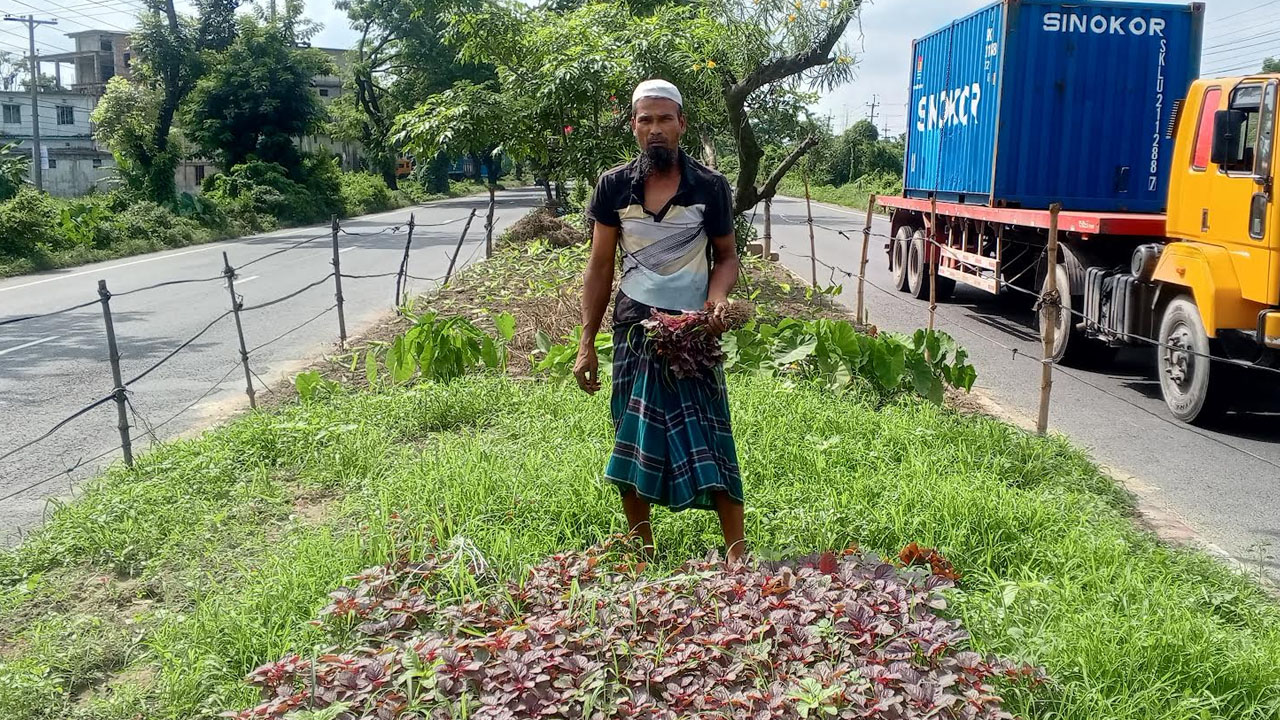
A variety of vegetables are now being cultivated on the unused land along the road medians of the Feni section of the Dhaka–Chattogram National Highway. This innovative farming initiative is not only supplying local communities with fresh vegetables but is also improving the livelihoods of landless and low-income farmers.
A visit to the area revealed that approximately 27.40 kilometers of the Dhaka–Chattogram National Highway—from Mohammad Ali in Chouddagram, Cumilla, to Dhumghat Bridge before Mirsharai, Chattogram—falls under Feni District. In several areas of Feni Sadar Upazila, including Rampur, Lalpul, Chhanua, Lemuya, Farhad Nagar, and Fazilpur, local farmers have begun cultivating various vegetables in the vacant spaces beneath large trees located in the highway medians.
According to the farmers, the soil in the medians is highly fertile, resulting in excellent crop yields. They are growing a wide range of year-round vegetables and crops, including chili peppers, coriander, radishes, spinach, red amaranth, sweet pumpkins, bottle gourds, hyacinth beans, okra, taro stems, and turmeric.
Emran Ali, a landless farmer from Rampur in Feni Sadar Upazila, said, "I have no farmland except the small plot where my house stands. For the past two years, I have been cultivating vegetables on the vacant land in the highway median. This season, I planted radishes, spinach, red amaranth, sweet pumpkins, and turmeric. The soil here is very fertile. After meeting my family's needs, I sell the surplus vegetables to nearby residents and earn some additional income."
Mohammad Atik Ullah, Deputy Director of the Department of Agricultural Extension in Feni, said, "Cultivating vegetables on highway medians is undoubtedly a commendable initiative. Farmers are making productive use of these previously unused lands to meet their household needs and generate income by selling surplus produce in local markets. This is a very positive development. We are providing them with the necessary technical guidance to help them achieve even better yields."