
86 Government health facilities worth Tk 42.58 billion remain closed due to staff shortage
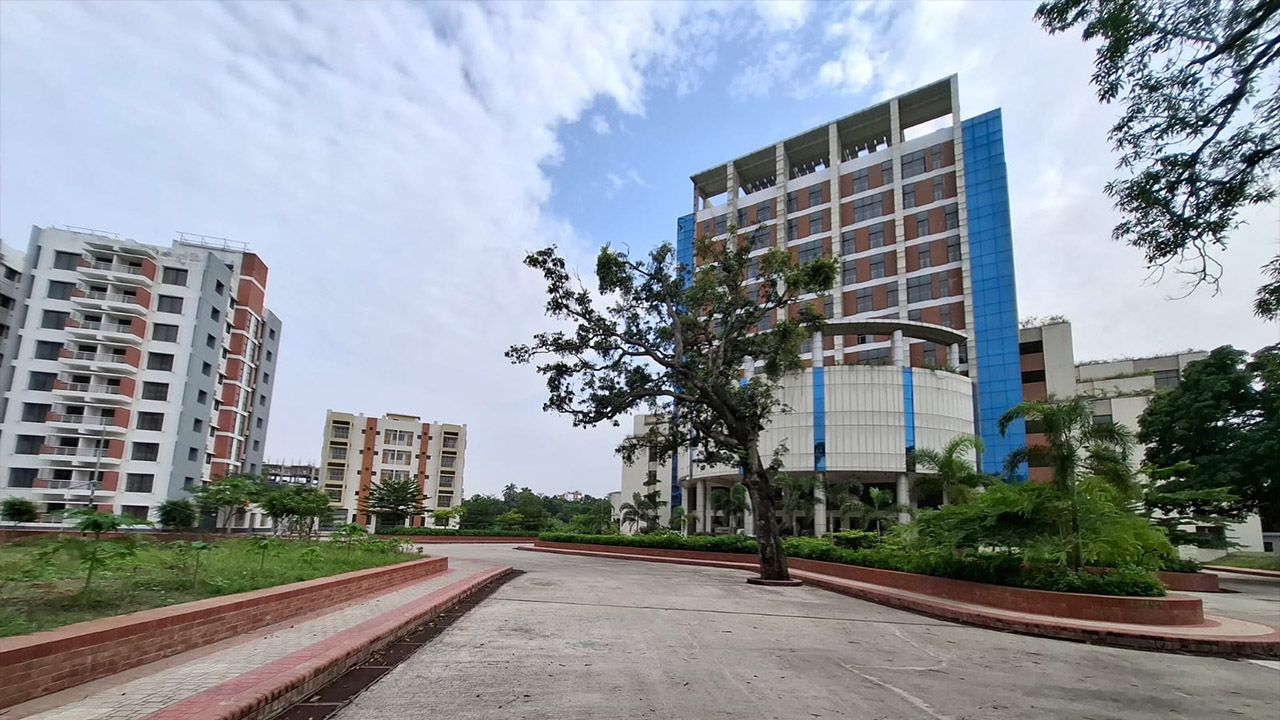
At least 86 government healthcare facilities across Bangladesh have remained non-operational for years due to a severe shortage of manpower, despite the government spending at least Tk 4,258 crore (Tk 42.58 billion) on their construction.
Although the buildings and medical equipment are in place, the lack of doctors, nurses, and other healthcare personnel has deprived patients of essential medical services.
Among the 86 institutions are upgraded district hospitals in Panchagarh, Lalmonirhat, Gaibandha, and four other districts. While healthcare services continue in their old buildings, newly constructed facilities built to expand capacity to 250 beds have yet to become operational.
Super Specialized Hospital Still Awaiting Full Operations
Bangladesh's only Super Specialized Hospital, built in the capital to provide world-class healthcare—including kidney and liver transplants, advanced cancer treatment, and cardiology services—also remains largely inactive.
The 750-bed hospital was constructed at a cost of Tk 1,560 crore, including Tk 1,047 crore in loans from South Korea, with the remainder financed by the Bangladesh government.
Former Prime Minister Sheikh Hasina inaugurated the hospital in 2022. However, allegations of widespread irregularities and corruption in the recruitment process stalled its operations almost immediately.
The hospital operates under Bangladesh Medical University (BMU). Despite several years having passed since its inauguration, the university authorities are still unable to specify when it will become fully operational.
Responding to queries, BMU Pro-Vice Chancellor (Administration) Professor Dr. Abul Kalam Azad said, "The administration is working tirelessly to make the hospital operational. However, it is difficult to say exactly when full operations will begin. The process of recruiting new staff is underway."
Hospital Director Professor Dr. Saif Ullah Munshi offered a more optimistic outlook.
"A new recruitment process is underway after cancelling the previous one. We hope the hospital can become fully operational in July or August," he said.
Tk 2.12 Billion Bangladesh Institute of Health Management Still Closed
The Bangladesh Institute of Health Management (BIHM) in Savar, built to train physicians, also remains unopened.
The project includes seven multi-storey buildings, including a 12-storey academic building, constructed at a cost of nearly Tk 212 crore.
Former Prime Minister Sheikh Hasina inaugurated the facilities on November 14, 2023. More than two and a half years later, the institution has yet to begin operations. The Health Department has not even formally taken possession of the buildings.
As a result, medical equipment worth around Tk 55 crore remains vulnerable to theft and deterioration.
After the inauguration, additional infrastructure work—including the sewage treatment plant (STP), boundary walls, and road improvements—continued. The project was implemented by the Directorate General of Health Education, the National Institute of Population Research and Training (NIPORT), and the Directorate of Nursing and Midwifery, while the Public Works Department (PWD) carried out the physical construction.
Mohammad Anwar Khan Anu, Sub-Assistant Engineer of Savar PWD, said, "We have repeatedly requested the relevant authorities to take over the buildings, but they still have not done so. Because they have remained unused for so long, some equipment has deteriorated and theft has also occurred. The contractor has already left, and the project's liability period has expired. Yet the authorities are still refusing to take possession."
He added, "Previously, an army camp was located at the project site, but it has been relocated. We are currently guarding the buildings with our own staff, but we cannot continue indefinitely. In simple terms, this project is deteriorating and causing financial losses to the government."
Trauma Centers and Small Hospitals Lying Idle
According to a list prepared last year by the Health Services Division, 80 healthcare institutions were identified as remaining closed due to manpower shortages, including 21 trauma centers.
These trauma centers were built at different times to provide emergency care for road accident victims. Of the 21 centers: Construction of two remains incomplete. Two operate only outpatient services. One is being used as an orthopedic unit of a district hospital.
The remaining 16 are completely closed despite having buildings and medical equipment.
According to ministry documents, each trauma center cost Tk 10–12 crore, bringing the total expenditure to at least Tk 250 crore. Some unused buildings have already fallen into serious disrepair.
Former Special Assistant (Health) to the Chief Adviser of the interim government, Professor Syedur Rahman, told Asia Post that the list also includes at least 25 hospitals with 10 and 20 beds.
A former Line Director of the Hospital Services Management Division, speaking anonymously, said each of these hospitals cost roughly Tk 30 crore, amounting to another Tk 750 crore in public expenditure.
The list also includes eight cancer hospitals, one in each administrative division.
Seven Upgraded District Hospitals Yet to Start Full Services
Seven district hospitals—including those in Panchagarh, Lalmonirhat, and Gaibandha—were upgraded from 100 to 250 beds.
Although construction was completed in 2024, none has been able to provide full services due to staff shortages.
Each hospital cost between Tk 30–35 crore, bringing the combined expenditure to at least Tk 210 crore.
Tk 506 Crore Neuroscience Hospital-2 Still Inactive
Another major project on the list is National Institute of Neurosciences Hospital-2, Bangladesh's only dedicated neurological specialty hospital.
Located in Agargaon, the 500-bed hospital was inaugurated in December last year, but has yet to begin operations.
The facility includes: Four operating theatres, A 36-bed Intensive Care Unit (ICU), A catheterization laboratory (Cath Lab), Separate 200-bed Neuro Surgery and Neuro Medicine units, and A 100-bed Neuro Trauma Unit.
Built at a cost of Tk 506 crore, the hospital remains unused, leaving stroke and neurotrauma patients without access to the intended specialized care.
Six Children's Hospitals Await Opening
Repeated attempts to launch six children's hospitals outside Dhaka have failed.
The 100-bed hospitals are located in: Rangpur, Rajshahi, Khulna, Barishal, Cumilla, and Sylhet.
Each facility cost between Tk 35–40 crore, bringing the combined expenditure to at least Tk 210 crore.
At Rajshahi Children's Hospital, a 200-bed building was completed nearly three years ago at a cost of approximately Tk 35 crore. Medical equipment remains unused, while only a single security guard protects the facility. Reports indicate that valuable equipment has already been stolen.
Rajshahi Civil Surgeon Dr. S.I.M. Raziul Karim told Asia Post, "The hospital is now under the divisional health authority. As far as I know, official correspondence is ongoing. Hopefully, it will become operational during the next fiscal year."
Following Prime Minister Tarique Rahman's directive on May 10 to launch the six children's hospitals, the Ministry of Health renewed efforts to activate them.
Health Minister Sardar Md. Sakhawat Hossain said on June 19 that tenders for furniture and medical equipment had already been completed.
He added that 1,475 personnel are required for each hospital, and the Ministry of Public Administration has been requested to approve the necessary staffing.
Tk 560 Crore Spent on 16 Idle Medical Assistant Training Schools
The list also includes 16 Medical Assistant Training Schools (MATS).
Each institution cost around Tk 35 crore, resulting in a total government expenditure of approximately Tk 560 crore.
Last year, the Directorate General of Health Education considered using them for training medical graduates, but the initiative failed. The facilities remain unused.
Billions More in Medical Equipment Also Idle
Overall, the government has spent Tk 4,258 crore solely on constructing these healthcare facilities.
In addition, medical equipment worth billions of taka remains unused.
What Officials Say
Director General of the Directorate General of Health Education, Professor Dr. Md. Nazmul Hossain, said, "During the previous Awami League government, healthcare and medical education institutions were established without proper planning. They were built without determining how they would be operated, resulting in a waste of public funds."
Director General of the Directorate General of Health Services, Professor Dr. Prabhat Chandra Biswas, said, "Many of the inactive institutions are medical education facilities. The ministry has formed a committee to make them operational, and representatives from the directorate are working on the issue."
Health Services Division Secretary Md. Kamruzzaman Chowdhury said, "The suspension of the Operational Plan (OP) created pressure across the system. As we attempt to restart operations, we are finding that records regarding project directors and institutional responsibilities are incomplete."
"Many facilities have not even been formally handed over to the Health Department. A committee involving Civil Surgeons and Upazila Health Officers has therefore been formed to review every case. We do not want any institution to remain closed solely because of manpower shortages. The government is working to ensure that people receive healthcare services from facilities built with public funds."