
BDT 922.6 million paid without delivery of goods, irregularities exceed BDT 1.55 billion

A bill worth BDT 922.6 million (92 crore 26 lakh) was paid under the Establishment of Digital Connectivity (EDC) project despite no goods being delivered, in violation of the contract terms. Financial irregularities exceeding BDT 1.55 billion (155 crore) were also identified, including excessive spending on routers, office furniture, and consultancy fees.
These findings were revealed in an intensive monitoring report prepared by the Implementation Monitoring and Evaluation Division (IMED) under the Ministry of Planning.
According to the report, irregularities involving the procurement of optical fiber cables constitute the project's largest financial fraud. IMED described the release of such a large amount of money without proper verification of documents as a serious breach of financial discipline.
The EDC project, with an original cost of BDT 59.23 billion (5,923 crore), was launched to extend high-speed internet and digital services to grassroots-level institutions. It is being implemented by the Department of Information and Communication Technology under the Ministry of Posts, Telecommunications and Information Technology.
The project began in 2021 and was originally scheduled for completion by November 2025. Due to delays, the deadline was extended to November 2026. However, even after four years, progress remains highly unsatisfactory.
As of April this year, the project's physical progress stood at only 18.29 percent, while financial progress reached 18.40 percent. Despite receiving a one-year extension, less than one-fifth of the work has been completed, prompting a proposal for another extension.
Under the proposed second revision, the project period has been extended by an additional three years until November 2029. As a result, a project initially planned for four years may now take nearly eight years to complete. At the same time, the project's budget has been revised downward from BDT 59.23 billion to BDT 25.45 billion (2,545 crore).
IMED noted that weak supervision and poor financial discipline have become major obstacles to the successful implementation of the project. The report emphasized that administrative reforms and greater transparency are essential to ensure quality completion of the remaining work.
BDT 245.3 Million Loss in Router Procurement
The evaluation report found that inconsistent pricing across different procurement packages caused the government to incur a loss of BDT 245.3 million (24 crore 53 lakh) in router purchases.
Evidence showed that identical routers were purchased at different prices under different packages. The procurement process lacked transparency, and the routers were allegedly purchased at inflated prices through collusion.
Irregularities in Office Renovation and Outsourcing
Although no allocation was approved in the Development Project Proposal (DPP), contracts worth BDT 28.3 million (2 crore 83 lakh) were awarded for office renovation, with the funds ultimately spent on purchasing furniture.
The government also incurred a loss of BDT 1.817 million (18 lakh 17 thousand) due to office rents exceeding the rates approved by the Ministry of Housing and Public Works.
Irregular contracts worth BDT 72.9 million (7 crore 29 lakh) were signed by overstating the quantity of patch cords to be procured.
A total of BDT 122.245 million (12 crore 22 lakh 45 thousand) was paid for outsourced personnel without clearly defining their responsibilities. An additional BDT 116.758 million (11 crore 67 lakh 58 thousand 337) was spent in violation of Ministry of Finance guidelines.
Local consultants received BDT 30.8 million (3 crore 8 lakh) without submitting mandatory quarterly progress reports. Another BDT 15.3 million (1 crore 53 lakh) was spent on hiring individual consultants in violation of the Public Procurement Rules (PPR) 2008.
The report identified ineffective internal auditing and failure to properly follow the PPR in procurement as the main causes of these repeated irregularities.
Connectivity Exists Only on Paper
Official documents claim that internet connections have been provided to nearly 55,000 institutions. However, field-level findings do not support this claim.
According to IMED's survey, 50.52 percent of users at connected institutions reported that their internet service is frequently disconnected. In many cases, the connection became unusable within 30 days of installation.
Faulty Equipment and Power Shortages
The report also highlighted serious deficiencies in the quality and maintenance of IT equipment supplied under the project. In many institutions, technical faults appeared within one month of installation, but vendors and internet service providers (ISPs) failed to respond effectively.
Although damaged equipment was reported, vendors often did not send technicians on time, leaving expensive digital equipment unused and deteriorating.
A lack of uninterrupted electricity supply has become another major obstacle. 42.06 percent of respondents said frequent power outages severely disrupted the use of digital equipment.
Most institutions lack adequate UPS or power backup systems, and even where backup facilities exist, they are often non-functional.
Internet speed is another concern. Although the contract requires a speed of 20 Mbps, in many cases the actual speed drops to 0 Mbps.
Systemic Weaknesses
Under the centralized procurement model, the average cost of providing internet connectivity to each institution was estimated at BDT 34,326, several times higher than prevailing market rates.
Upazila ICT officers have neither financial nor administrative authority, resulting in lengthy delays in repairing technical faults.
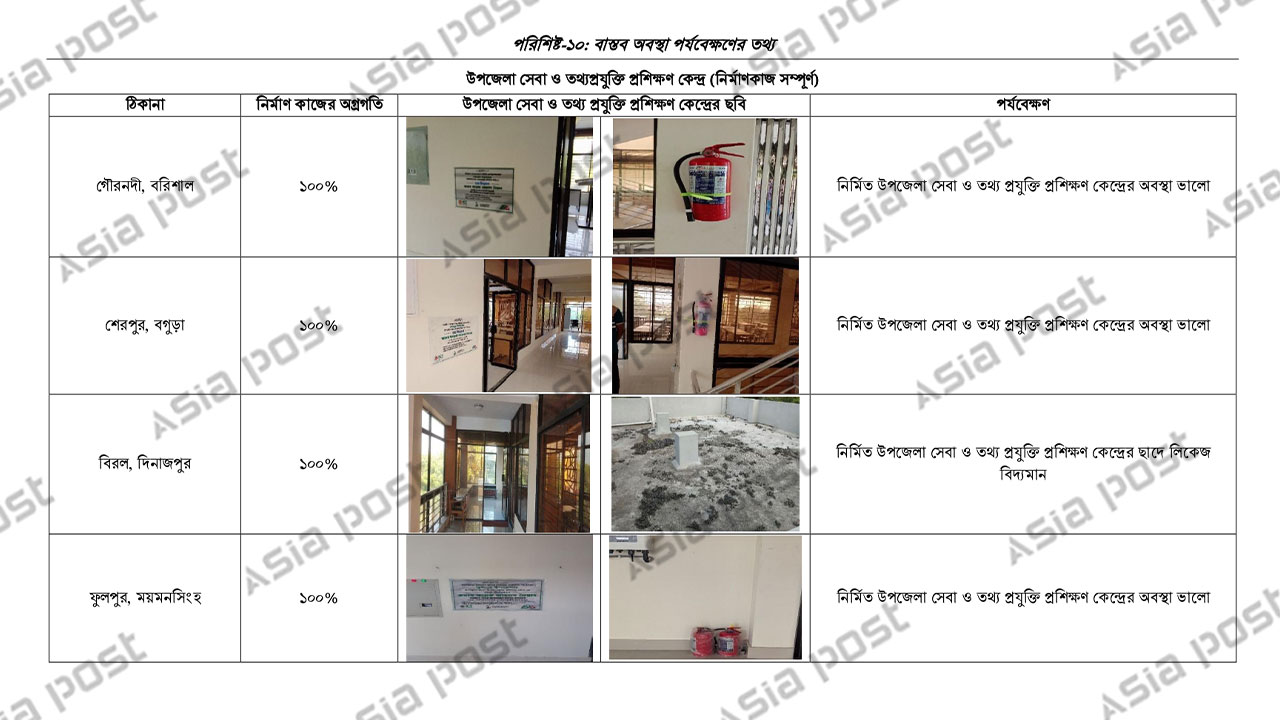
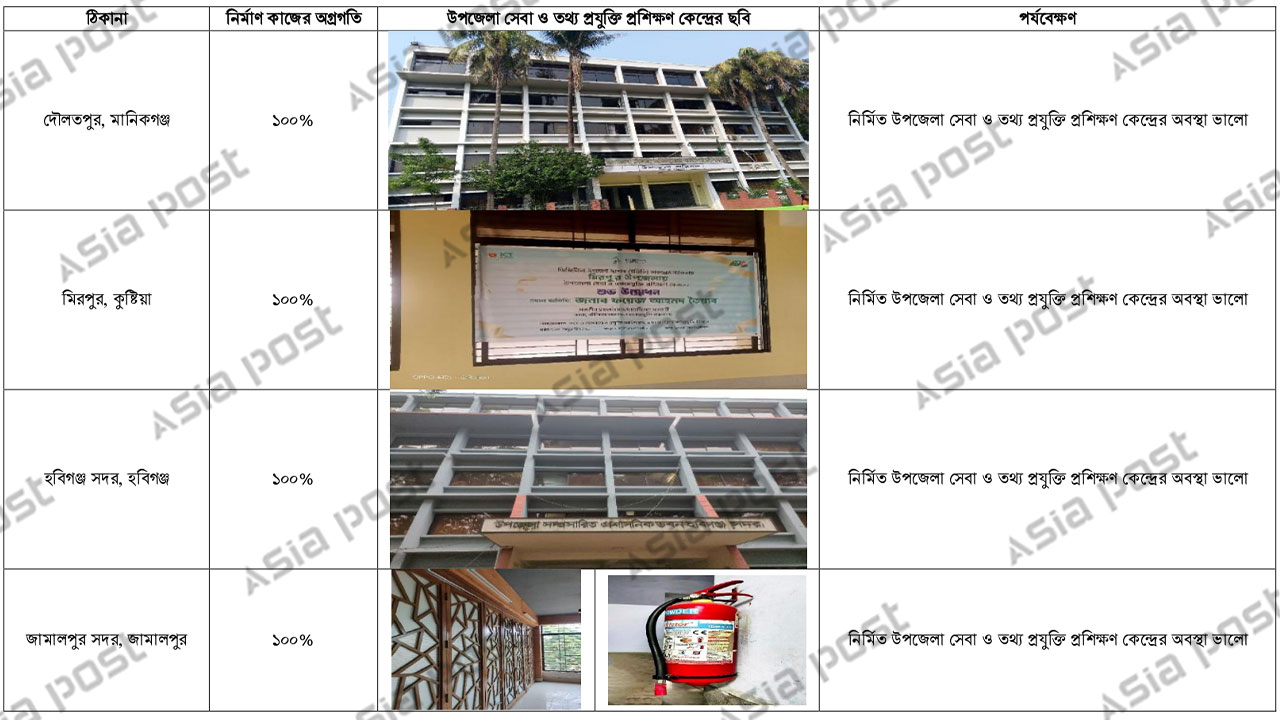
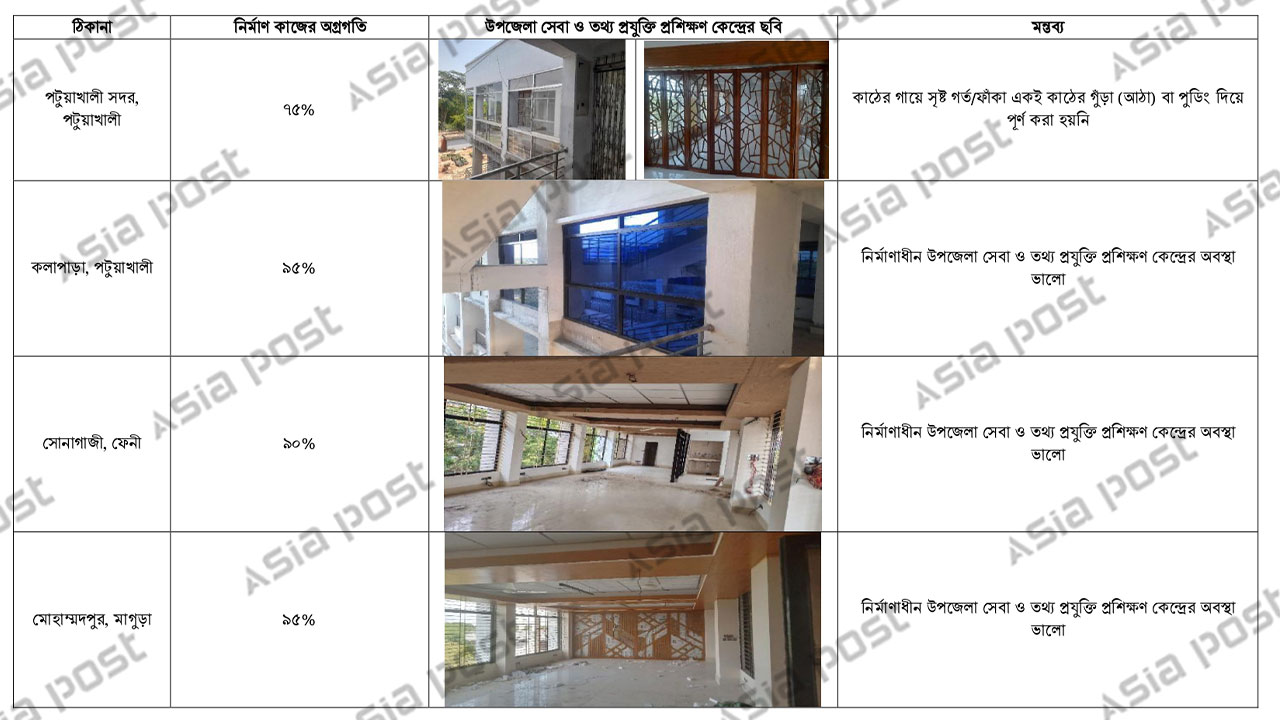
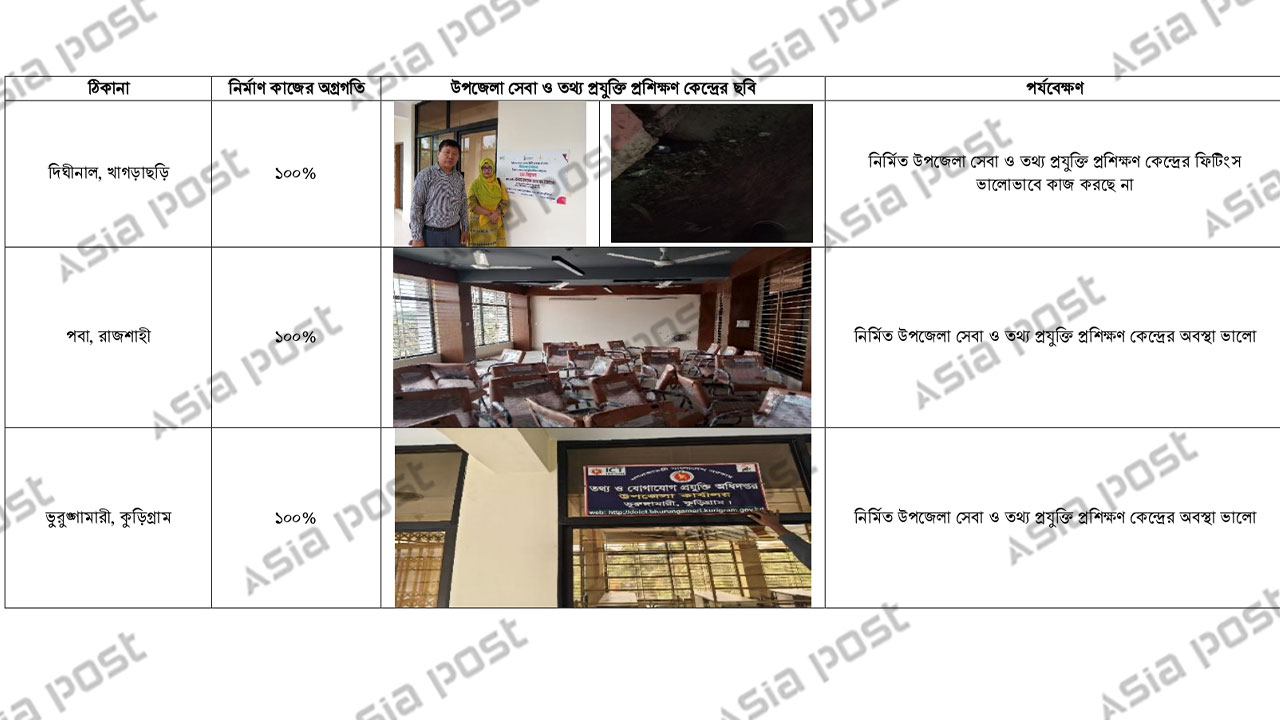
While project documents claim that construction of 100 ICT training centers at the upazila level has been completed, field inspections revealed poor finishing work.
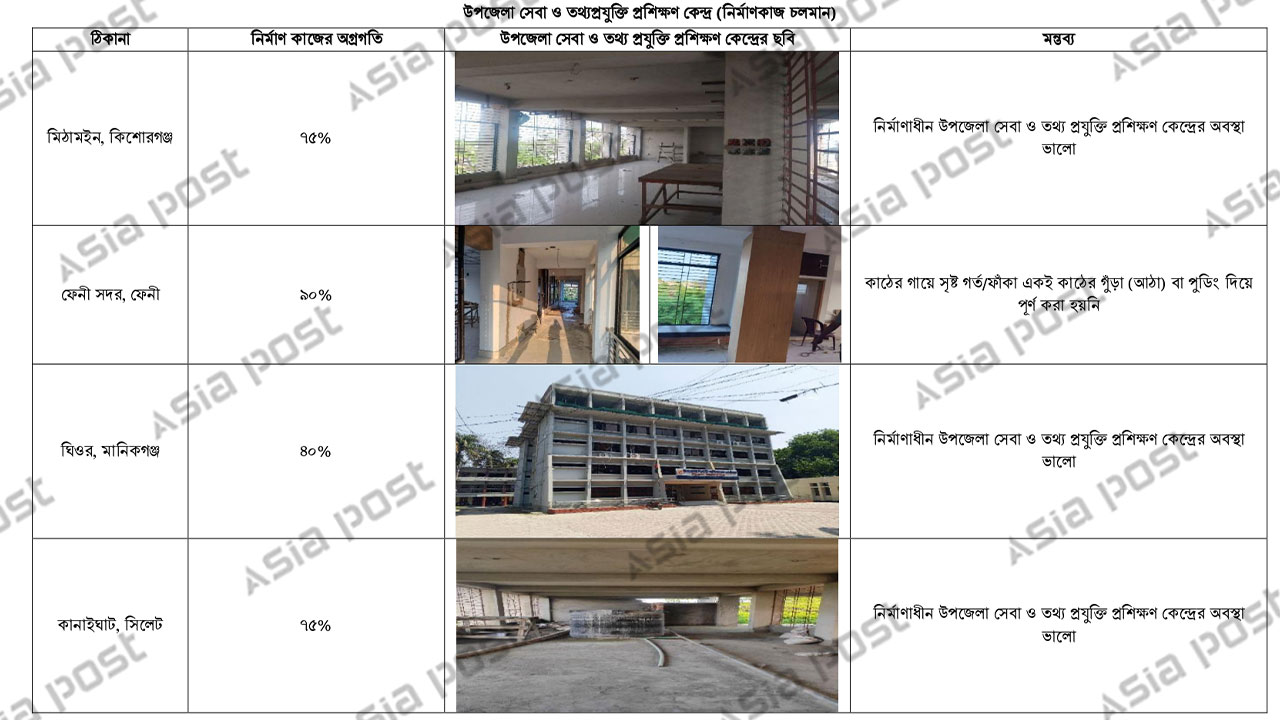
In Birampur of Dinajpur, water leaks through the roof of a newly constructed building, while in Dighinala of Khagrachhari, building fittings are not functioning properly.
In many locations, furniture has been delivered but not installed, leaving government assets unused and vulnerable to damage.
Poor Management
The project has seen three Project Directors (PDs) replaced over the past four years. Of the 644 approved positions, 61 key posts remain vacant, most of them related to technical operations and supervision.
Although the Ministry of Finance approved the recruitment of 71 government personnel, only seven have been appointed. According to the Implementation Monitoring and Evaluation Division (IMED), frequent changes in project leadership and the shortage of manpower have stalled the decision-making process.
IMED Recommendations
To ensure the effective implementation of the project, IMED has put forward several recommendations. These include increasing internet bandwidth, introducing backup connectivity and network redundancy, ensuring optimal use of Upazila ICT centers, establishing an effective monitoring framework, preparing realistic procurement plans, and setting up a centralized network monitoring system.
The agency also emphasized decentralizing administrative authority at the local level, strengthening training programs, and ensuring cybersecurity and data protection.
Project Director's Response
When contacted by Asia Post, Project Director Tanjina Islam said, "As part of the audit process, the audit officer inspected only six institutions in two districts out of the country's 64 districts. In two of those institutions, the connection between the router and the media converter was provided using a two-core optical fiber cable instead of the required four-core cable."
She added, "Based on the calculated rate of connections provided up to June 2025, the auditors raised an objection involving Tk 922.6 million. Subsequently, all institutions where two-core optical fiber cables had been used instead of four-core cables were upgraded with four-core optical fiber cables. The process of resolving the audit objection is currently underway."
Regarding the different prices paid for routers, she said, "Open tenders were invited, and around 150 Internet Service Providers (ISPs) participated in the bidding process. Different companies submitted different financial quotations for the same item. Although the quoted prices for routers varied among bidders, the total cost of all items remained within the official cost estimate prepared by the project office. Therefore, no financial loss was incurred."
Responding to allegations that more than Tk 120 million had been paid to outsourced personnel without clearly defining their responsibilities, she said, "The responsibilities of outsourced personnel were clearly specified in the tender documents, and a contract was awarded to the lowest bidder accordingly."
On the issue of 52 percent of users being disconnected from internet services, she said, "In some cases, internet bandwidth has been disrupted because customers failed to pay bandwidth charges directly to the ISPs. To ensure uninterrupted service, official DO letters have been sent to the relevant authorities requesting arrangements for customers to pay the bandwidth charges."
Regarding complaints that vendors failed to respond promptly after equipment became faulty, she said, "All equipment supplied by ISPs comes with a one-year warranty from the date of installation. Any equipment that failed during the warranty period was replaced by the respective ISP.
After the warranty expires, institutions are responsible for repairing the equipment at their own expense. In addition, ISPs are required to respond promptly to any internet-related issues. If specific complaints are received, appropriate action will be taken against the concerned company."