
WASA's Tk 4,500 crore project has now swelled to Tk 16,000 crore
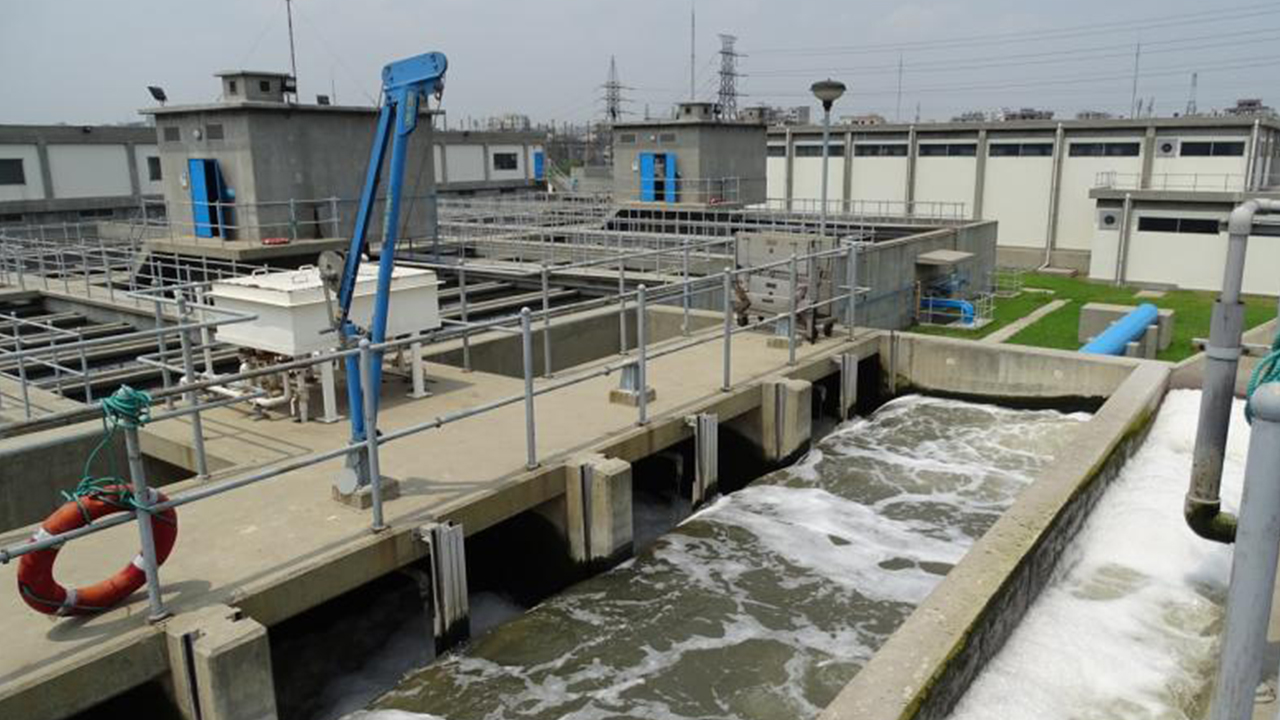
The cost of Phase-3 of the Sayedabad Water Treatment Plant Project, a key initiative aimed at addressing Dhaka's water shortage, has increased by nearly four times. Initially estimated at around Tk 4,500 crore, the project now exceeds Tk 16,000 crore.
Meanwhile, the similar Gandharbpur Water Treatment Project is nearing completion at a cost of only Tk 11,000 crore. The significant disparity in cost and capacity between the two projects has raised questions about the expenditure structure of the Sayedabad project.
The project is strategically important for Dhaka because it is expected to reduce dependence on groundwater, help maintain environmental balance, and establish a sustainable long-term water supply system. However, a review of official documents shows that compared with the Gandharbpur project—which is of similar nature and being implemented during the same period—the Sayedabad project has been allocated nearly Tk 5,000 crore more. Despite this, the Gandharbpur project offers greater production capacity and more extensive infrastructure.
Three Phases of the Water Treatment Project
The Sayedabad Water Treatment Plant is one of the largest components of Dhaka's water supply infrastructure. Its primary objective is to reduce reliance on groundwater by treating river water and supplying safe drinking water to the capital. Water from the Meghna River will be collected, treated using modern purification technology, and distributed across different areas of Dhaka.
Over time, the project has expanded into three phases: Phase-1, Phase-2, and Phase-3.
Initially, water was collected from the Shitalakshya River, treated, and supplied to consumers. However, after the Shitalakshya became heavily polluted, the project shifted to increasing water intake from the Meghna River, with a target of supplying an additional approximately 450 million liters of water per day.
The treatment process begins with collecting water from the river. Chemicals are then added to bind suspended particles together, allowing them to settle. The water is subsequently filtered to remove finer particles before being disinfected to ensure it is safe for consumption. The entire system is operated through modern automated technology.
Phase-3 represents the largest expansion of the project. It includes construction of a new intake station, long transmission pipelines, a high-capacity pumping system, and integration with the existing treatment plants. The expansion aims to modernize the overall system and meet the growing water demand of Dhaka's increasing population.
Project Cost Increased Repeatedly
During the Awami League government, the implementation of Phase-3 of the Sayedabad Water Treatment Plant was approved with an estimated cost of Tk 4,597.36 crore. The project was originally scheduled to run from 2015 to 2020. However, little actual progress was made.
Later, during the same administration, the project cost was revised upward to Tk 7,518.03 crore, and the completion deadline was extended to 2025. Even after the revision, implementation remained slow.
Despite limited progress on the main works, after 2024 the project cost was increased for a second time by a factor of 2.13, reaching Tk 16,014.83 crore. Official records indicate that when this cost escalation was approved, less than 10 percent of the project's principal work had been completed.
Project Director Appointed in Violation of Regulations
Although he reportedly does not meet the required qualifications, Executive Engineer Md. Mostafizur Rahman, a fifth-grade officer, continues to serve as Project Director.
According to ministry sources, Mostafizur was appointed Project Director as a reward for filing allegations against former WASA Chairman Dr. Golam Mostafa. The appointment was made by former Managing Director Taqsem A. Khan, who himself has been accused in corruption cases.
In May 2023, Dr. Golam Mostafa publicly criticized then-Managing Director Taqsem A. Khan during a television interview. Following this, Taqsem allegedly arranged for Mostafizur Rahman to become General Secretary of the Dhaka WASA Engineers' Association in violation of regulations. Subsequently, complaints were submitted to the ministry through three professional associations, ultimately leading to Dr. Golam Mostafa's removal as chairman.
As a reward, Mostafizur was appointed Project Director. However, according to the applicable regulations, the Project Director of this project must hold at least the rank of Additional Chief Engineer in Grade 3.
Questions Over Project Progress
As of October 2025, the project's physical progress stood at only 16.65 percent, while financial progress was just 0.21 percent. No further progress reports have been published online since then, despite regulations requiring monthly publication.
By contrast, the similar Gandharbpur Water Treatment Project has a finalized cost of Tk 10,973.54 crore following its third revision and is now nearing completion.
Last month, Local Government, Rural Development and Cooperatives Minister Mirza Fakhrul Islam Alamgir visited the Gandharbpur project. Speaking to reporters afterward, he said:
"Once the Gandharbpur Water Treatment Plant in Rupganj, Narayanganj, begins operating by drawing water from the Meghna River, it will supply 500 million liters of purified water to Dhaka every day."
The minister added that trial operations and partial water supply are expected to begin by December this year. Full-scale operations are planned within the following year, enabling Dhaka WASA to ensure regular water supply throughout the capital.
He further stated that if another similar project is implemented, an additional 500 million liters of water could be supplied daily, playing a significant role in meeting Dhaka's long-term water demand.
Higher Cost Despite Lower Capacity
Two major water supply projects are currently under implementation to improve Dhaka's water distribution system: the Sayedabad Water Treatment Plant (Phase-3) and the Dhaka Environmentally Sustainable Water Supply Project (Gandharbpur Water Treatment Plant). A comparison of their costs and infrastructure reveals several inconsistencies.
According to project documents, the revised cost of Sayedabad Phase-3 now stands at Tk 16,014.83 crore following its second revision. In comparison, the Gandharbpur project's cost after its third revision is Tk 10,973.54 crore.
This means the Sayedabad project costs approximately Tk 5,041 crore more than the Gandharbpur project. However, despite the substantially higher expenditure, Sayedabad shows no notable advantage in infrastructure capacity. Overall, Gandharbpur appears to be the stronger project.
The documents show that Gandharbpur includes an intake facility with a capacity of 1.05 billion liters per day and a treatment plant capable of producing 500 million liters daily.
By comparison, Sayedabad Phase-3 includes an intake capacity of 950 million liters per day and a treatment plant with a capacity of 450 million liters daily.
Gandharbpur also features a more extensive water distribution network. The project includes 72 kilometers of 1,600-millimeter transmission pipelines and an additional 67 kilometers of primary and secondary water pipelines.
In contrast, the Sayedabad project includes 44 kilometers of 2,200-millimeter transmission pipelines and 52 kilometers of primary and secondary pipelines.
Additionally, Gandharbpur incorporates 497.5 kilometers of network across 16 District Metered Areas (DMAs), 50 deep tube wells, 1,550 toilets and bathing facilities, and acquisition of 200 acres of land. No such additional infrastructure components are reflected in the expenditure breakdown for the Sayedabad project.
Breakdown of Expenditure
An analysis of the expenditure categories also reveals significant differences.
For Component-1 alone, the Sayedabad project has allocated Tk 12,232.88 crore—an amount exceeding the total cost of the entire Gandharbpur project.
The Sayedabad project has allocated Tk 1,781.26 crore for customs duties, whereas the Gandharbpur project has allocated Tk 1,265.45 crore under the same category.
The financing structures of the two projects also differ. The Sayedabad Phase-3 project includes foreign loans amounting to Tk 11,448.66 crore, while the Gandharbpur project has foreign financing of Tk 6,739.35 crore.
Official documents indicate that despite lower overall costs, the Gandharbpur project provides greater water production capacity, a larger distribution network, and additional infrastructure facilities. Nevertheless, the Sayedabad Phase-3 project costs nearly Tk 5,000 crore more.
As a result, questions have been raised regarding the justification for the project's cost, its expenditure structure, and the necessity of various components included in the revised Development Project Proposal (DPP).
What the Authorities Say
Dhaka WASA Managing Director Md. Aminul Islam told Asia Post:
"While the Gandharbpur project's treatment capacity is 500 million liters per day, the Sayedabad Phase-3 system has a total treatment capacity associated with 950 million liters. Naturally, the cost will be higher. The water will come from the Meghna River. Of this, 225 million liters each will be supplied to Sayedabad Phases 1 and 2, while the remaining 500 million liters will be supplied through Sayedabad Phase-3."
When asked about the alleged violation of regulations in appointing the Project Director, he said:
"This appointment was made before I assumed office. Therefore, I have no knowledge of the matter."