
If you don't want us here, just tell that: Iran captain to FIFA in frustration
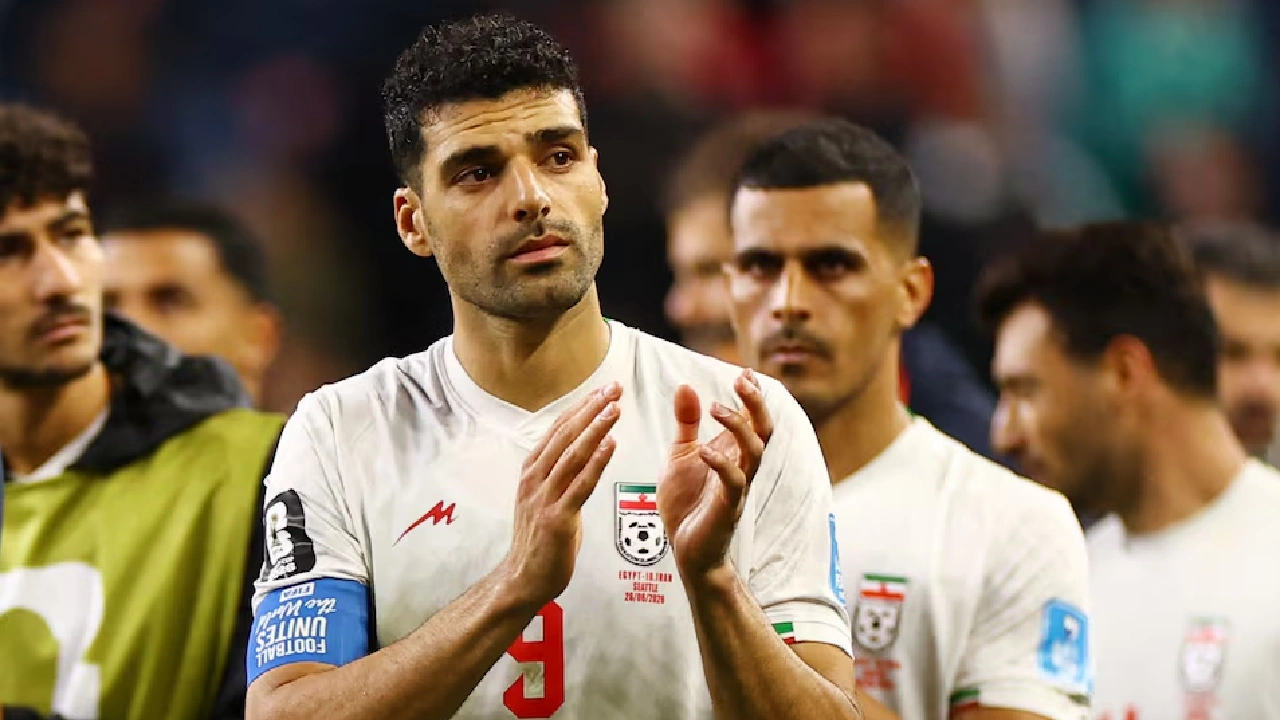
There was disappointment on the pitch over a missed penalty, a shot off the crossbar, and a last-minute goal ruled out. Off the pitch, however, the frustration ran even deeper.
After Iran's 1-1 draw with Egypt, captain Mehdi Taremi sharply criticized the team's World Cup experience in the United States, alleging that Iran had been treated unfairly in terms of travel arrangements. He even suggested that Iran was not truly welcome at the tournament.
Iran drew 1-1 with Egypt in their final Group G match in Seattle. The result was not enough to secure automatic qualification for the Round of 32. With three points, Amir Ghalenoei's side must now wait and hope to advance as one of the best third-placed teams.
Taremi himself was at the center of Iran's missed opportunities. He failed to convert an early penalty, struck the crossbar with a late header, and deep into stoppage time, Shoja Khalilzadeh's potential winner was ruled out for offside following a Video Assistant Referee (VAR) review.
Speaking to reporters after the match, Taremi expressed both disappointment and anger.
"FIFA is supposed to solve all the problems here. Unfortunately, from the very beginning, they haven't been able to do that."
Although Iran has been playing its World Cup matches in the United States, the team has been based in Tijuana, Mexico, due to travel restrictions. As a result, the squad has repeatedly had to travel back and forth between Mexico and the U.S. Before the Seattle match, U.S. authorities eventually allowed the team to enter the country two days in advance instead of just one. However, Taremi argued that such arrangements were unacceptable in a professional tournament.
"How is it possible that we always have to go back to Tijuana? We love the people of Mexico. We love Tijuana. They are wonderful, very kind people. But as professional players competing in a professional tournament, this isn't right."
Taremi's strongest remarks came when discussing the overall treatment of Iran.
"Who wants to help us? Who? If they want us to leave, fine—we'll leave. But this isn't fair."
He also revealed that FIFA President Gianni Infantino visited Iran's dressing room after their opening match.
"He told us, 'This is only the beginning.' But the group stage ends tomorrow, and the people responsible for our travel arrangements still aren't here."
The match had already carried significant political tension. Some spectators waved Iran's pre-revolution flag, while boos were heard during the Iranian national anthem. Just hours earlier, reports had emerged of renewed accusations between the United States and Iran over military strikes and alleged violations of a ceasefire, adding further tension before kickoff.
FIFA did not immediately comment on Taremi's remarks. However, the complaints extend beyond the captain. Head coach Amir Ghalenoei also criticized the travel restrictions and inadequate logistical arrangements, arguing that they had negatively affected the team's preparation, recovery, and overall performance.
On the field, it was a frustrating night for Iran as well. A victory over Egypt would have guaranteed direct qualification for the Round of 32. Instead, after Mahmoud Saber gave Egypt an early lead, Ramin Rezaeian equalized for Iran. Taremi then missed a penalty, later hit the crossbar, and saw a stoppage-time winner ruled out for offside. Iran ultimately had to settle for a draw and must now wait for the results of other groups to determine their fate.
Iran's World Cup story has therefore become about more than football. While remaining unbeaten on the pitch, the team now faces uncertainty over qualification. Off the field, their captain has raised serious questions about tournament organization, travel logistics, fairness, and the impact of political realities. At a World Cup whose message is to unite people through football, Iran's experience has once again brought that ideal into question.