
Why Argentina's winning goal stood despite Egypt's objections
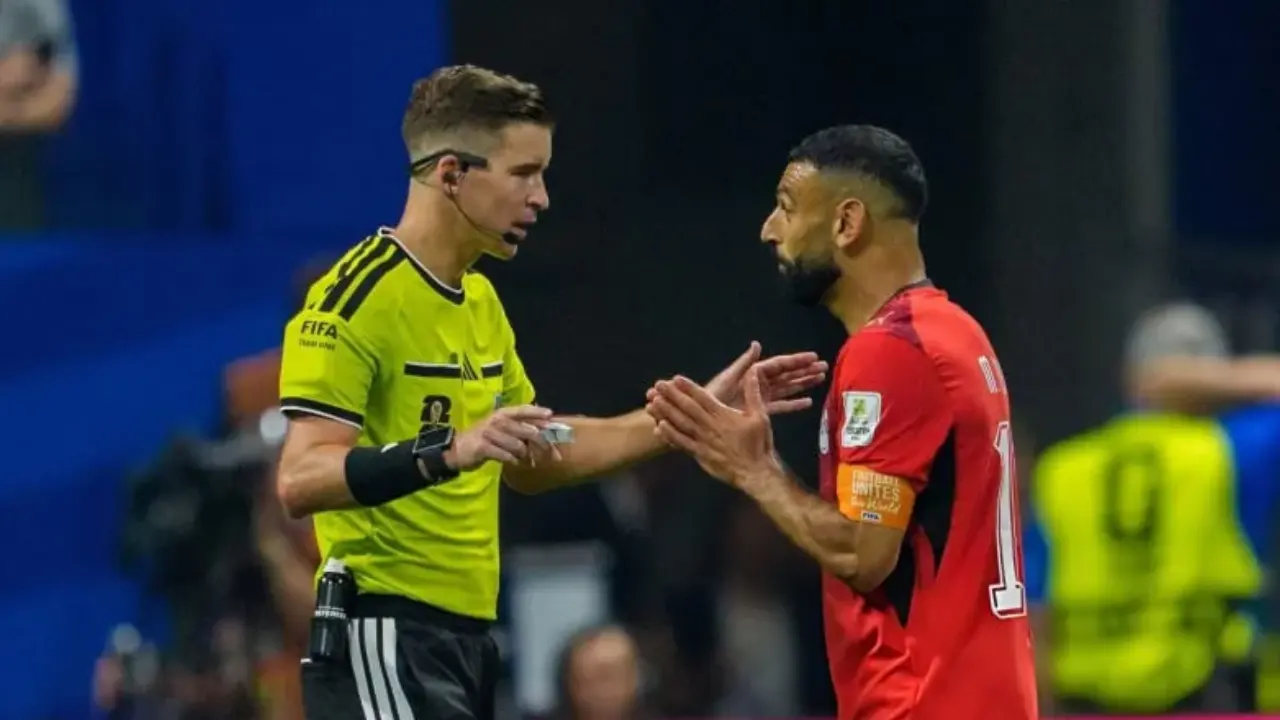
Argentina's dramatic 3-2 comeback victory over Egypt has sparked major controversy over Enzo Fernández's stoppage-time winner. Egypt argued they should have been awarded a penalty moments before Argentina scored the decisive goal. However, the referee allowed play to continue, and the Video Assistant Referee (VAR) did not intervene. Argentina then launched a counterattack and found the winner.
In the Round of 16 clash, Egypt held a commanding 2-0 lead before the defending champions staged a remarkable comeback through goals from Cristian Romero, Lionel Messi and Enzo Fernández. According to Reuters, Egypt head coach Hossam Hassan strongly criticized the officiating after the match, pointing to both a disallowed Egyptian goal and a penalty appeal involving Hamdy Fathy that immediately preceded Argentina's winning goal.
The controversial incident occurred inside Argentina's penalty area. Egypt claimed that Hamdy Fathy had been pulled down and should have been awarded a penalty. Referee François Letexier waved play on, while the VAR officials did not recommend an on-field review. That decision lies at the heart of the controversy.
Under the International Football Association Board (IFAB) VAR Protocol, an on-field decision can only be overturned if video evidence shows a "clear and obvious error." While penalty and no-penalty decisions fall within VAR's scope, not every physical challenge constitutes a foul. For VAR to intervene, officials must be convinced that the referee made a significant and obvious mistake.
For Argentina's third goal to have been disallowed, one of two conditions would have needed to apply. First, there would have had to be an infringement during Argentina's attacking move, such as an offside offence, handball, the ball going out of play, or an attacking foul. Second, VAR would have needed to determine that Egypt's penalty appeal should have resulted in a penalty because the referee's decision was a clear and obvious error.
Neither condition was met.
The VAR officials concluded that the decision not to award Egypt a penalty did not meet the threshold for intervention, allowing play to continue. Argentina immediately launched a counterattack, with Lautaro Martínez delivering a cross that Enzo Fernández headed into the net. No offence was detected during the attacking phase leading to the goal, so it was allowed to stand.
Egypt, however, remained unconvinced. Coach Hossam Hassan reiterated that his side deserved a penalty and also criticized the disallowing of one of Egypt's goals. The Associated Press match report also noted Egypt's frustration over both the disallowed goal and the refereeing decisions. Nevertheless, the final decision stood, as Argentina secured a 3-2 victory to book a place in the quarter-finals.
In simple terms, Argentina's winning goal remained valid because VAR did not consider Egypt's penalty appeal to involve a clear and obvious refereeing error, while no infringement was found during the attacking sequence that produced Enzo Fernández's goal. The controversy remains, but under the Laws of the Game and the VAR Protocol, the goal was correctly allowed to stand.