
What comes next? Everything to know about 2030 FIFA World Cup
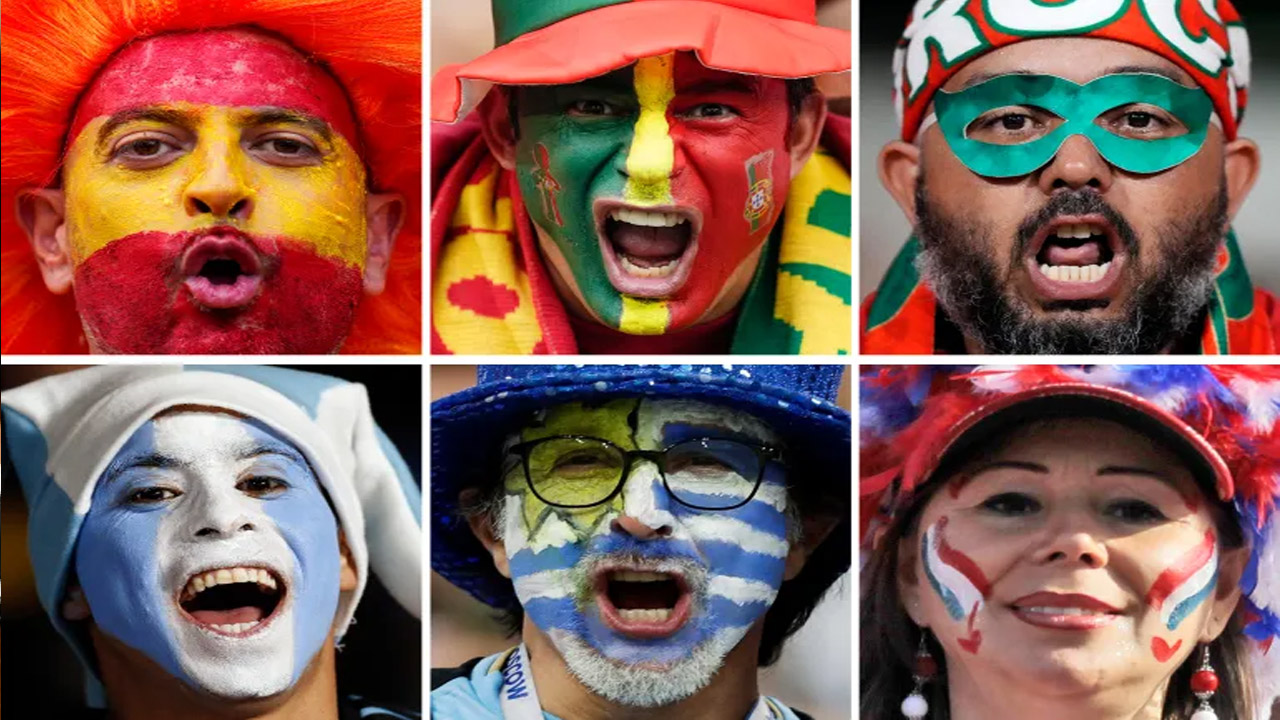
The 2026 FIFA World Cup concluded with the final between Argentina and Spain, where Spain defeated Argentina 1-0 to end a 16-year wait and reclaim the title of world champions. By winning their second World Cup, La Roja joined France and Uruguay on the list of nations with two FIFA World Cup titles.
With the tournament now over, many football fans are asking when and where the next World Cup will take place. The 2030 FIFA World Cup is set to be a historic edition, marking the centenary of the tournament.
Below is everything you need to know about the next FIFA World Cup.
When Will the Next FIFA World Cup Be Held?
The 2030 FIFA World Cup will be the tournament's 24th edition.
According to the proposed schedule, the centenary opening matches will be played on June 8 and 9, 2030, in Uruguay, Argentina, and Paraguay. The tournament will then officially shift to its main host nations—Morocco, Portugal, and Spain—where the principal opening matches are expected to take place on June 13 and 14.
The World Cup final is tentatively scheduled for July 21, although FIFA has not yet released the official match calendar.
Where Will the 2030 World Cup Be Hosted?
Spain, Portugal, and Morocco will jointly host the majority of the tournament.
To commemorate the 100th anniversary of the FIFA World Cup, Uruguay, Argentina, and Paraguay will each host one opening-stage match before the competition moves entirely to the three main host countries.
According to FIFA, Uruguay was selected because it hosted the inaugural World Cup in 1930. Argentina was awarded a match as the runner-up of that first tournament, while Paraguay was chosen because it is home to the headquarters of CONMEBOL, South America's football confederation.
The 2030 edition will become the first men's FIFA World Cup to be staged across six countries on three different continents.
Countries Already Qualified
As host nations, six countries have automatically qualified for the 2030 FIFA World Cup:
Spain, Portugal, Morocco, Uruguay, Argentina and Paraguay.
The remaining 42 places will be decided through FIFA's continental qualifying competitions over the coming years.
Tournament Schedule and Format
The three South American host nations will receive additional time between their commemorative opening matches and the start of the group stage to accommodate long-distance travel, recovery, and preparation.
Following the centenary matches on June 8 and 9, the official opening ceremony and first-round fixtures in Morocco, Portugal, and Spain are expected to begin on June 13 and 14.
The remaining teams in the groups containing Uruguay, Argentina, and Paraguay are expected to begin their World Cup campaigns on June 15 and 16, with the second round of matches in those groups tentatively scheduled for June 21 and 22.
FIFA has yet to publish the final fixture list.
Could the Tournament Expand to 64 Teams?
The 2030 FIFA World Cup is currently expected to retain the 48-team format that was introduced for the first time at the 2026 tournament in the United States, Canada, and Mexico.
However, FIFA President Gianni Infantino has confirmed that the organization will examine a proposal to expand the tournament to 64 teams.
Speaking to Swiss media outlet Bluewin, Infantino described the 48-team World Cup as a "huge success," saying the format has given more countries the opportunity to compete at the highest level while contributing to the global growth of football.
Referring to the impressive performances of several emerging football nations at the 2026 World Cup, he argued that broader participation benefits the sport. When asked whether the tournament could eventually expand to 64 teams, Infantino said the proposal would be formally reviewed and discussed.
The Historic Journey of the FIFA World Cup
The idea of a standalone FIFA World Cup emerged after Uruguay won back-to-back Olympic football gold medals in 1924 and 1928.
At the time, the men's Olympic football tournament was organized by the International Olympic Committee (IOC). FIFA therefore decided to create its own global competition for national teams.
According to FIFA, around 50,000 spectators watched Uruguay defeat Switzerland 3-0 in the final of the 1924 Paris Olympics to win the gold medal. Four years later, Uruguay successfully defended its Olympic title by beating football powerhouse Argentina 2-1 in the 1928 Olympic final.
Those remarkable achievements convinced FIFA to establish a separate World Cup tournament.
In May 1928, FIFA officially approved the plan and selected Uruguay as the inaugural host, recognizing both its Olympic success and the country's celebration of the centenary of its independence in 1930.
The first FIFA World Cup kicked off in July 1930 with just 13 participating teams. Several European nations traveled by sea to reach Uruguay. In the final at Montevideo's historic Estadio Centenario, host nation Uruguay defeated Argentina 4-2 to become the first men's FIFA World Cup champions.
Since then, the tournament has expanded dramatically—from 13 teams in 1930 to 32 teams in 1998, and to 48 teams in 2026. The 2030 edition will celebrate the competition's 100th anniversary while becoming the first World Cup to be held across three continents and six countries.
What Comes After 2030?
The next men's FIFA World Cup after 2030 will be held in 2034, with Saudi Arabia serving as the sole host nation.
After no competing bids were submitted, FIFA officially confirmed Saudi Arabia as the host of the 2034 FIFA World Cup in December 2024.
Unlike the 2030 tournament, which will be spread across six countries on three continents, the 2034 World Cup will be hosted entirely by a single nation.
FIFA has not yet announced the final dates or complete schedule for the tournament.
Source: Al Jazeera