
Could wildfire smoke affect Spain–Argentina final
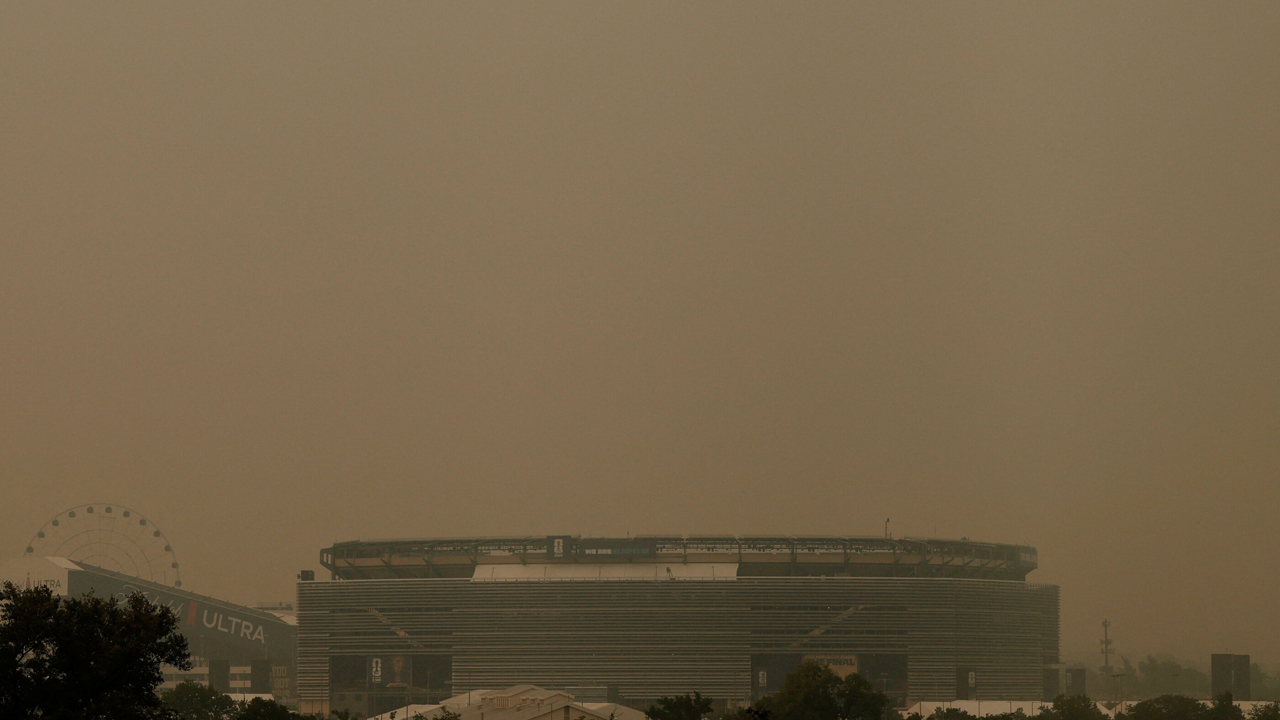
Dense wildfire smoke drifting south from Canada has blanketed New York and New Jersey, prompting unhealthy air quality alerts across much of the United States. The deteriorating air conditions have raised concerns over Sunday's (July 19) FIFA World Cup final between Spain and Argentina at MetLife Stadium in New Jersey.
With winds shifting southward, smoke also engulfed Washington, D.C. on Friday (July 17), where air quality reached the second-highest level on the "very unhealthy" scale. Authorities advised residents to avoid all outdoor activities unless absolutely necessary.
The World Cup final is scheduled to be played at the open-air MetLife Stadium in the New York metropolitan area. Air quality in New York and neighboring New Jersey currently remains unhealthy for sensitive groups. Conditions, however, improved somewhat on Friday compared with Thursday, when heavy haze nearly obscured Manhattan's skyline.
According to global air quality monitoring platform IQAir, Detroit and Chicago reached hazardous pollution levels, making them the world's most polluted cities at one point.
Meteorologists at the U.S. National Weather Service (NWS) warned that smoke could become denser overnight and linger through Saturday morning. The Meadowlands stadium in New Jersey, home to the NFL's New York Giants and New York Jets, is expected to host around 80,000 spectators for the final.
Despite the smoky conditions, FIFA confirmed on Friday that the wildfire smoke and poor air quality do not currently pose a major threat to the World Cup final. Earlier in the day, tournament organizers had said they were "closely monitoring" the situation.
Andrew Giuliani, executive director of the White House World Cup Task Force, said during a briefing, "The issue has already been discussed. One of our officials is working directly with representatives from the National Weather Service at FIFA headquarters to closely monitor the situation."
U.S. President Donald Trump was also scheduled to meet FIFA President Gianni Infantino on Friday.
National Weather Service meteorologist Peter Mullinax told AFP that winds moving across the Great Lakes could push additional smoke into the northeastern United States, keeping skies hazy. However, he said conditions in the Northeast are expected to improve somewhat.
"If the match were being played today, the impact would likely be greater. I believe Sunday's final will not be affected as severely," Mullinax said.
Joel Dreessen, an air quality forecaster in the state of Maryland, said much will depend on whether thunderstorms over the weekend allow more smoke to move south.
"Some forecast models suggest additional smoke could descend into our region," he said.
Weather has already disrupted several matches during this World Cup, although not because of wildfire smoke. Rumors had circulated that the knockout match between Mexico and England would be rescheduled due to adverse weather.
Tournament organizers later dismissed the speculation and confirmed the match would proceed as scheduled. Earlier in the competition, Mexico's Round of 32 match against Ecuador was delayed by nearly an hour because of severe weather.
Meteorologists had also warned that extreme heat during July could pose risks to players in several knockout matches. A powerful "heat dome" stretching across large parts of the United States and Canada has produced dangerous temperatures.
Temperatures in several host cities are expected to exceed 43 degrees Celsius (110 degrees Fahrenheit).
Across the U.S. Midwest and Northeast, residents have been wearing masks outdoors to protect themselves from hazardous smoke. Free masks are being distributed at libraries and train stations in New York City. Air quality has remained at risky levels for several days in the states of Michigan, Minnesota and Wisconsin, which are closer to the wildfire zones.
Chicago has extended its air quality advisory, warning that smoke could return Saturday evening and persist through Sunday.
Environmental advocates have highlighted the growing connection between recurring wildfire smoke and climate change. Paul Mathewson, director of science programs at Wisconsin-based environmental organization Clean Wisconsin, said, "The increasingly smoky skies remind us that we must accelerate the transition to renewable and clean energy instead of continuing to rely on polluting fossil fuels, which are driving climate change."
Mark Parrington, a scientist at the Copernicus Atmosphere Monitoring Service, told AFP that climate change is increasing air temperatures while reducing soil moisture, creating conditions that prolong wildfire seasons.
"As a result, once fires ignite, they can burn for much longer periods and continue for weeks throughout the summer," he explained.
Canada's wildfire situation worsened further on Friday. Government officials said more than 200 wildfires remain out of control in Ontario alone. Although this year's damage is less severe than in 2023, fire activity has intensified rapidly over the past week.
In 2023, Canada's worst wildfire season on record destroyed nearly 18 million hectares of forest. This year, however, the pace of destruction has accelerated sharply in recent days. Official figures show that about 2.8 million hectares have burned since the beginning of the year, compared with 1.6 million hectares just a week earlier.
Although no fatalities have been reported from the Ontario wildfires, residents in vulnerable remote communities have been evacuated as a precaution.