
How Iran war drives a wedge between Crown Prince Mohammed bin Salman and Trump
US President Donald Trump and his military commanders found themselves in a difficult position. Early in the war, Iran effectively closed the Strait of Hormuz. To facilitate the passage of commercial shipping through the strategic waterway, the US military announced a new operation. Military commanders said that during the temporary ceasefire, US naval and air forces would defend commercial vessels against any Iranian attacks.
However, U.S. Central Command (CENTCOM) soon encountered an unexpected obstacle. Saudi officials informed Washington that U.S. forces would not be allowed to use Saudi airspace for the operation. The Pentagon had named the mission "Project Freedom." The United States had not consulted Saudi Arabia beforehand.
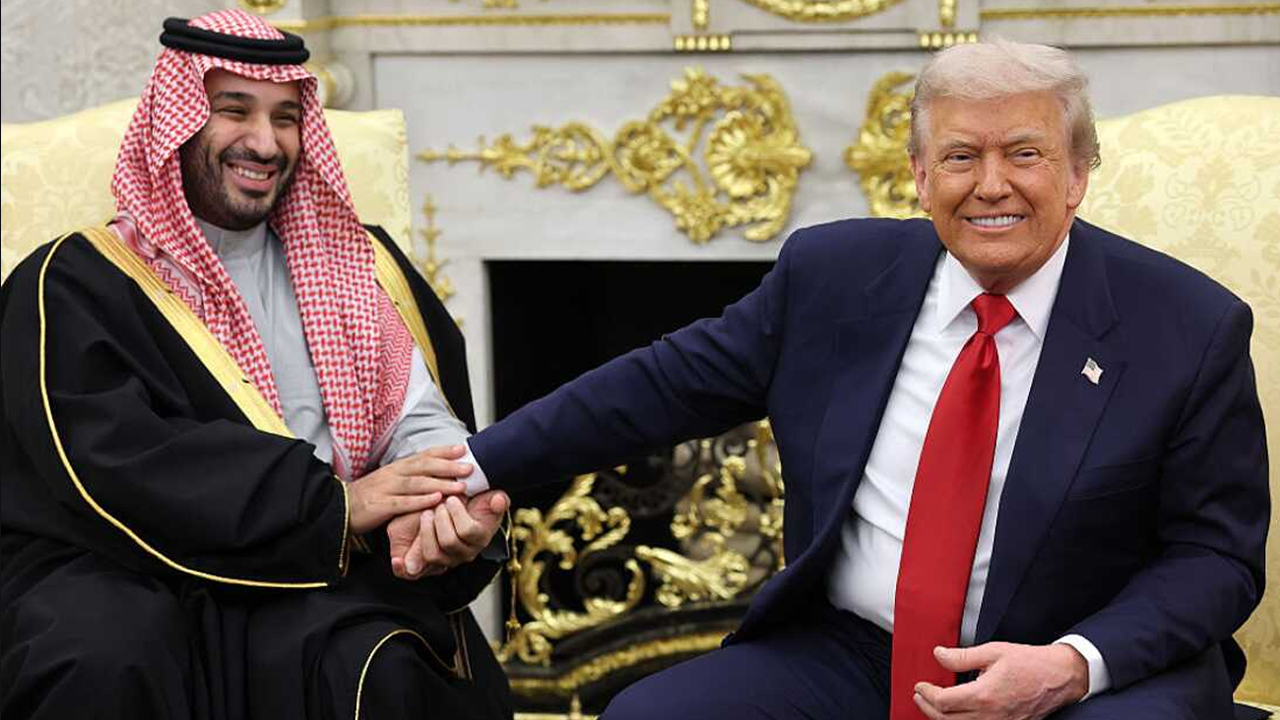
The incident triggered severe tensions between Washington and Saudi Crown Prince Mohammed bin Salman. A series of urgent phone calls followed. According to U.S. officials, on the first day of the operation, May 4, an angry President Trump spoke directly with the Crown Prince. The two leaders also held conversations over the following two days.
Vice President J.D. Vance separately called the Crown Prince. Middle East envoy Steve Witkoff and Trump's son-in-law Jared Kushner also reached out. White House National Security Adviser Marco Rubio spoke with his Saudi counterpart.
Despite the pressure, the Crown Prince refused to change his position. He feared that the U.S. operation could reignite and further escalate the conflict. Ultimately, the Trump administration was forced to cancel Project Freedom before the war had reached its first 48 hours.
Photo caption: Iran launched strikes on Riyadh, Saudi Arabia, on March 5 during the war with the United States and Israel. Photo: Collected.
Veteran diplomat Michael Ratney said, "The moment Iran closed the Strait of Hormuz, the entire strategic psychology of the Gulf region changed."
Hussein Ibish, a scholar at the Arab Gulf States Institute in Washington, said Saudi Arabia had lost confidence in the U.S. administration. According to him, Riyadh believed that allowing the United States to use its airspace would invite even more devastating Iranian attacks against Saudi Arabia.
The White House's extensive efforts to persuade the Crown Prince have not previously been made public. The crisis revealed profound differences between American and Saudi officials over regional security, particularly regarding Iran and Israel.
Saudi leaders have become increasingly skeptical after witnessing Trump's repeated shifts in policy during the war. They are no longer certain whether the United States would guarantee their security in any future conflict. According to the report, Saudi distrust of Trump dates back to 2019, when drone and missile attacks struck Saudi oil facilities but Trump declined to retaliate against Iran.
Hussein Ibish further remarked, "We start a major fight, and then when we get bored, we simply walk away." He compared the situation to the cartoon character Charlie Brown, arguing that Saudi Arabia now feels like Charlie Brown—left lying helpless after being deceived time and again.
White House spokeswoman Anna Kelly, however, insisted that President Trump's relationship with Saudi Arabia remains excellent. She said Trump listens to all sides before making decisions that serve America's national security interests. Saudi Arabia's Foreign Ministry declined to comment.
Despite these tensions, key aspects of the U.S.-Saudi partnership remain strong. Discussions continue over a civilian nuclear program for Saudi Arabia under an agreement reached last year. The Trump administration is expected to submit a related proposal to Congress soon. Nevertheless, U.S. and Israeli officials fear that Crown Prince Mohammed bin Salman could eventually pursue nuclear weapons.
Washington and Riyadh are also discussing alternative overland trade routes that would bypass the Strait of Hormuz. Saudi Arabia also remains the largest purchaser of U.S. weapons.
During both of his presidential terms, Trump chose Saudi Arabia as the destination for his first foreign trip. His son-in-law Jared Kushner has long maintained a close personal relationship with Crown Prince Mohammed bin Salman. Although Kushner holds no official government position, he continues to visit Riyadh regularly. Four years ago, a Saudi sovereign wealth fund led by the Crown Prince invested $2 billion in Kushner's investment firm.
Despite their close ties, Trump has publicly mocked the Crown Prince. Speaking at an investment conference in Miami last March, Trump made disparaging remarks, saying the Crown Prince had underestimated both him and his administration. According to Trump, Mohammed bin Salman never imagined he would eventually have to flatter Trump.
Further signs of strain emerged last week when U.S. Secretary of State Marco Rubio visited Bahrain, Kuwait, and the United Arab Emirates but skipped Saudi Arabia. During meetings in Bahrain, Rubio discussed regional security with Gulf diplomats and separately met with the Saudi foreign minister.
At the meeting, Rubio said the current crisis had become a major test for the alliance. He added, "Our cooperation and friendship have passed this test with distinction."
Although Saudi Arabia welcomed the ceasefire, many unresolved issues remain. The preliminary agreement effectively accepts Iran's control over the Strait of Hormuz. Iran and Oman will now determine how the waterway is administered. This could eventually allow Iran to impose substantial transit fees or tolls on international shipping.
Former U.S. Ambassador Michael Ratney warned, "Iran now possesses a powerful instrument—the control of the Strait of Hormuz—with which it could hold the global economy hostage."
The preliminary agreement makes no mention of Iran's ballistic missile program or its support for regional militias. It also remains uncertain whether the Trump administration can ultimately negotiate a new nuclear agreement with Tehran. After Trump withdrew from the Obama-era nuclear deal in 2018, Iran significantly expanded its uranium enrichment activities.
Saudi Arabia has publicly welcomed Trump's diplomatic initiative. Speaking at a meeting in Vienna on June 18, Saudi Foreign Minister Prince Faisal bin Farhan said, "This agreement is extremely important. We hope it will bring an end to the conflict and create an opportunity to resolve other issues, including the nuclear file."
Privately, however, Saudi officials are taking a cautious "wait-and-see" approach. They want to assess the agreement's outcome before making further commitments. Although the deal envisions financial support for Iran's reconstruction, Riyadh has not yet released any funding.
Author: Edward Wong has covered U.S. Middle East policy from Washington for many years and has reported on three successive U.S. administrations.