
China tests submarine-launched ballistic missile in Pacific
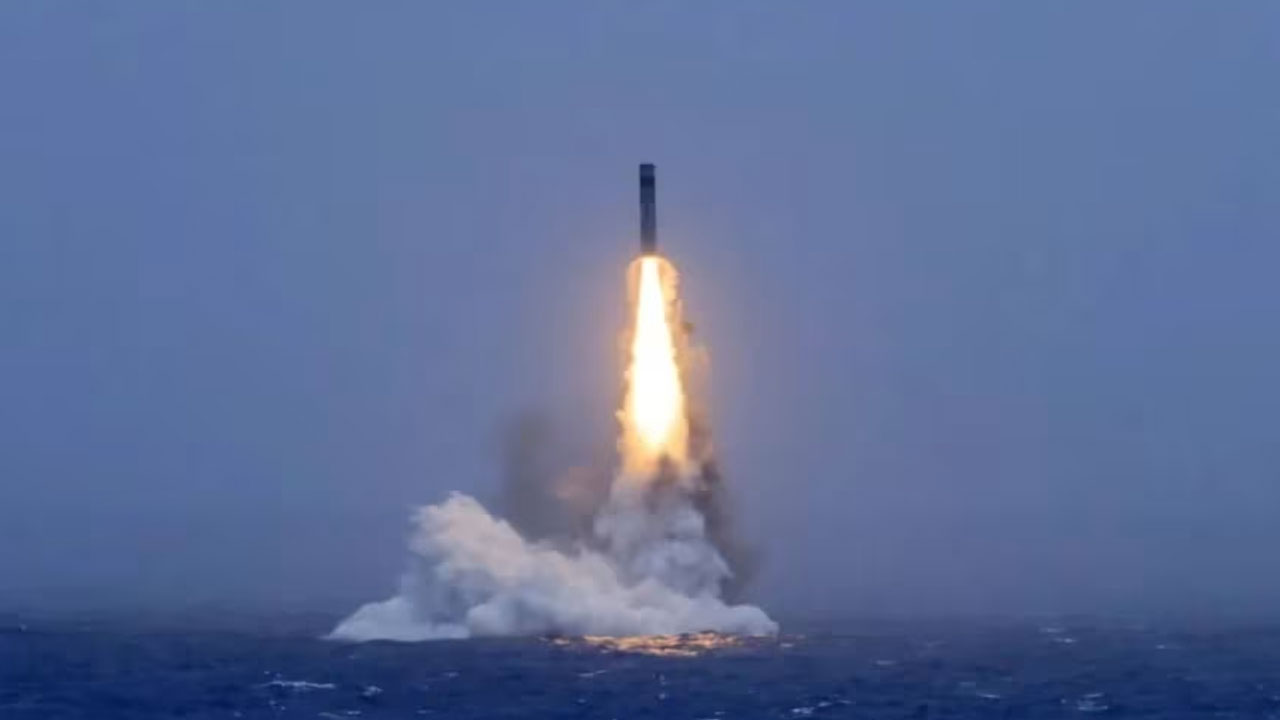
China has conducted a test of a long-range submarine-launched ballistic missile (SLBM) in the Pacific Ocean.
In a statement, Senior Captain Wang Xuemeng, spokesperson for the Chinese People's Liberation Army (PLA) Navy, said the missile was launched from a submarine into international waters in the Pacific on Monday (July 6). He said the missile carried a dummy warhead instead of a live nuclear warhead and successfully struck its designated target.
Wang described the launch as a routine test conducted as part of China's annual military exercises. He said relevant countries had been notified in advance.
He also claimed the test was carried out in accordance with international law and established international practices, adding that it was not directed at any specific country.
However, a regional source familiar with the matter said the missile flew over the Exclusive Economic Zones (EEZs) of the Federated States of Micronesia, Nauru, Kiribati, and Tuvalu, before splashing down in waters near the EEZ boundary of Kiribati or Tuvalu.
The U.S. State Department said it had monitored the launch of an intercontinental-range ballistic missile capable of carrying a nuclear warhead.
Washington has accused China of pursuing a rapidly expanding and opaque nuclear weapons programme, warning that it poses concerns for both the region and the wider world. It urged Beijing to engage in meaningful arms control talks.
Beijing has not disclosed the type of missile that was tested. CNN has sought comment from China's Ministry of National Defense regarding the launch.
Military analysts believe the Chinese Navy operates the JL-2 and JL-3 submarine-launched ballistic missiles. The JL-3 has a range long enough to strike the continental United States even when launched from the South China Sea.
China's primary ballistic missile submarine is the Type 094, or Jin-class, submarine. The PLA Navy currently operates six submarines of this class.
Beijing rarely publicizes its missile tests. However, according to the Center for Strategic and International Studies (CSIS) Missile Defense Project, the JL-3 missile was first tested in 2018 and again the following year.
New Zealand Foreign Minister Winston Peters said China conducted the test in an area covered by the South Pacific Nuclear Free Zone, established under the 1986 Treaty of Rarotonga.
He said China had informed New Zealand in advance that it intended to launch a long-range ballistic missile into the South Pacific. However, he described the move as unwelcome and concerning, adding that neither New Zealand nor its regional neighbours wanted the South Pacific to be used as a missile testing ground.
Australian Foreign Minister Penny Wong also described the test as "destabilising for the region." She said China's rapid military expansion and the lack of sufficient transparency surrounding its activities were heightening concerns among countries across the region.
Japan also expressed "grave concern" over China's growing military activities and called on Beijing to reconsider conducting such ballistic missile tests. Taiwan likewise criticized the launch, saying it further demonstrated China's expansionist ambitions in the western Pacific.